Feedback on TISFD Framework

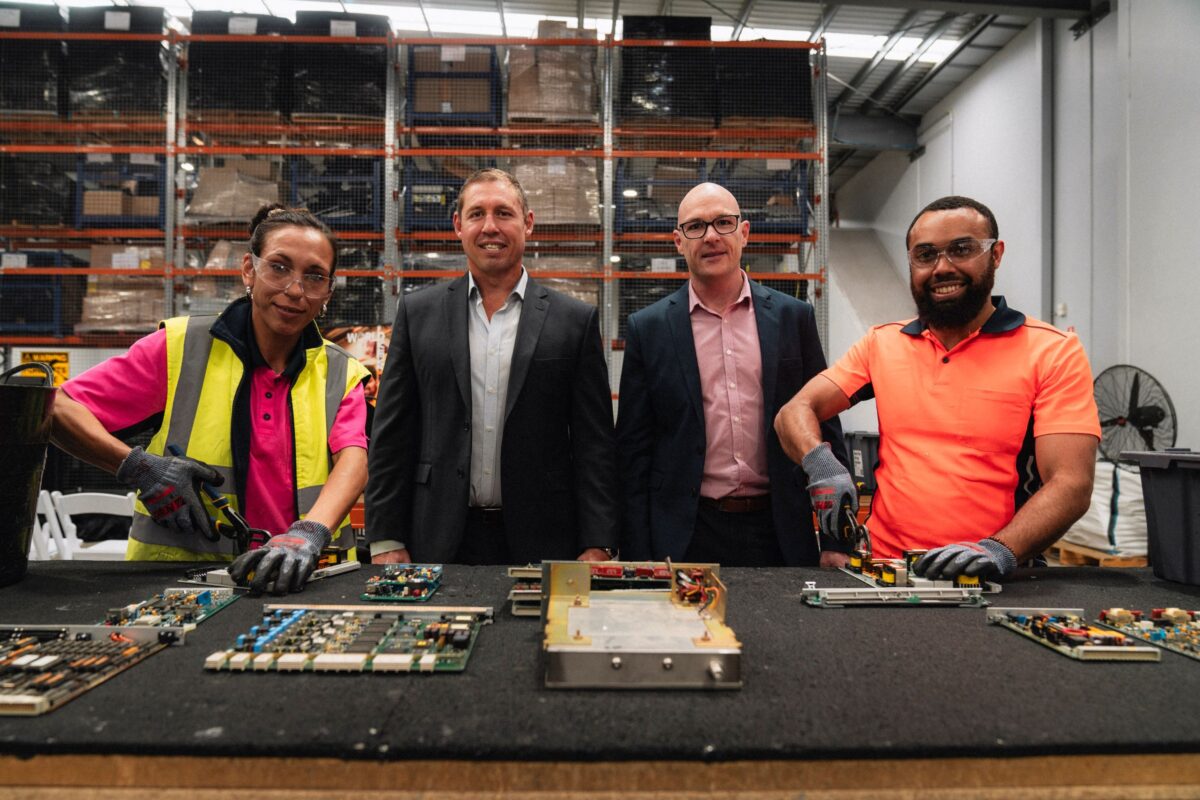
Social Traders consultation response on what Australian business needs to make it work. Image: WV Technologies
Late May 2026, the Taskforce on Inequality and Social-related Financial Disclosures (TISFD), a global initiative, developed a Framework (Beta Version 0.1). It helps businesses and financial institutions identify and disclose people-related impacts, dependencies, risks and opportunities. By making these issues more visible, the framework aims to support better business decision-making, stronger investor insight and clearer accountability to stakeholders.
This first version includes:

Conceptual foundations

Proposed general requirements

Draft disclosure recommendations

Areas for future development
Future editions will include a set of recommended metrics and implementation guidance.
As part of the consultation period, Social Traders, an Alliance member of the TISFD, engaged with our progressive business members seeking their feedback on the proposed framework through a facilitated discussion. We’re sharing our consolidated response, which we’ve submitted to the TISFD.
1. What are the strengths of the TISFD Framework Beta Version 0.1 which should be retained?
We strongly welcome that this work exists. A global framework for people-related disclosure fills a real gap, and the Beta Version is a credible first step.
The strengths we would retain:

Shared terminology
The common language and consistent definitions for impacts, dependencies, risks and opportunities. Shared terminology is one of the most useful things the Framework offers, and the Framework should protect it as it evolves.

The building-blocks approach
It’s usable as a standalone or to complement existing standards without duplicating effort. This directly addresses our members' concern that they are “already reporting a lot”.

Alignment with existing frameworks
Clear alignment with the TCFD and TNFD structure (governance, strategy, impact and risk management), which makes the framework recognisable and lowers the learning curve for businesses.

Relationship with other global issues
Explicit recognition of the interconnection between people, nature and climate.

The why
The overall business case for acting on inequality and social issues is sound.
Two caveats on that last point. Firstly, the business case is strong but global. For it to land with Australian businesses, we would value a clear national “why”. For example, Social Traders use local inequality data and economic impact of certified social enterprises with our business members and Government members (Local, State and Federal) to demonstrate the impact of good social performance.
Secondly, the business case is strong 'in theory' but lacks immediate and material relevance to many businesses. Showing more explicitly how social disclosures relate to the bottom line would strengthen it. Without a burning platform, it will be difficult for businesses to allocate time to adopt voluntary disclosures amongst competing priorities.
2. How can we improve the Framework?
The Framework is good, big and lofty (which makes sense for a first step). However, for busy businesses that are already delivering and reporting on a range of social performance initiatives, the practical “so what do I actually do” is hard to extract. Our suggested improvements:

Plainer language and a sharper problem statement
Clearly articulate the material problem for business, why a business should care, and how this differs from (rather than duplicates) what they already report. The employees and supplier social performance pillars are very strong avenues for people-related impacts, but the business case for organisations to invest in good social performance is still a “nice to have” – not a need. The TISFD framework will help transition from “nice” to “need”.

A localised, one-page business case
A short, national argument for why the TISFD is good for business – and why it is worth getting ready now – would do more to drive adoption than the global case alone.

Broaden the interoperability mapping
Aligning with TCFD/TNFD is valuable but not sufficient in Australia, where Modern Slavery, Reconciliation Action Plans, diversity and inclusion, community engagement, and a range of state and national requirements already cover people-related reporting.

Make reporting as simple as possible
Reduce the practical burden and show how existing data (for our members, social enterprise procurement spend) can feed the Framework rather than requiring new collection.
3. Does the Framework support interoperability with other disclosure frameworks, including the ISSB Standards, ESRS, and GRI Standards? Why or why not?
Partially, and it is heading in the right direction. It clearly draws on ISSB, GRI and ESRS, mirrors the TCFD/TNFD architecture, and the building-blocks design is meant to explicitly complement rather than replace existing standards. This supports interoperability at the level of structure and concepts.
Where it falls short for our members is jurisdiction-specific interoperability. Our members already report against Australian obligations, e.g. The Modern Slavery Act, Reconciliation Action Plans, Gender equality, and various community engagement, which vary from State to National requirements. The Framework does not yet show how it maps to, reuses, or sits alongside these. Without that mapping, the risk is duplicated reporting rather than a fuller picture from existing effort. As the framework evolves, we would encourage inclusion/ recognition of National people-related reporting regimes, not just international sustainability standards.
4. Does the Framework support the integration of issues related to people, nature and climate? Why or why not?
In principle, yes, this is a genuine strength. The Framework explicitly recognises the links between people, nature and climate, notes how environmental degradation exacerbates inequality (and how eroding people's wellbeing undermines support for the green transition), and encourages integrated management and disclosure alongside climate and nature frameworks.
The Framework makes the conceptual case for integration well, but there is limited practical guidance on how a business actually assesses and reports these issues together. We note the Framework flags this as an area for further development (Section 5.4) and encourage TISFD to prioritise it, with worked examples, so integration is achievable and not just aspirational.
5. How can we improve the General requirements?
The five general requirements (materiality, system-relevant information, stakeholder engagement, scope, time horizons) are coherent. To improve them:

Materiality is the requirement most in need of plain-language explanation and a worked example. Businesses need to know, concretely, how to decide what is material and how much is enough.

Reduce the assessment burden implied by scope and stakeholder engagement, or clearly stage it, so smaller and mid-sized organisations can start without a large upfront exercise.

Anchor the requirements to existing practice. Show how data an organisation already produces (e.g. social procurement spend for our members) can satisfy parts of these requirements.

System-relevant information is currently high-level; clearer guidance and examples of what TISFD actually expects would help preparers respond.
6. How can we improve the draft disclosure recommendations?
- Prioritise metrics and targets. The people driving change in businesses for social performance need concrete, comparable metrics to know what “good” looks like and to report consistently. We would welcome the opportunity to input, and note that social enterprise procurement spend is an existing, quantifiable people-related metric our members already collect.
- Simplify and de-duplicate. For each recommendation, show where it overlaps with existing reporting so preparers can reuse rather than re-do.
- Add practical, sector-relevant examples of good disclosure under each pillar (governance, strategy, impact and risk management).
- Right-size expectations so the recommendations are achievable for busy employees, who have to convince their leadership this is worth investing in, and when they should get ready.

Impact Practice
7. What guidance would you need to apply the draft disclosure recommendations?
The three things our members said they need most:
- A map to Australian national and state reporting requirements, showing where the TISFD aligns, differs, or can be satisfied by existing reporting (Modern Slavery, Reconciliation, D&I, community engagement, and state/national obligations).
- A clear answer to “why do it, and why now?” The business imperative, plus the risk or consequence of not acting. This is the single most persuasive piece of guidance for getting business ready.
- A simple reporting tool or template and worked examples that make application practical rather than theoretical.
Social Traders
Social Traders is Australia's industry body for social enterprise and social performance, the people-related impacts of business. Since 2018, we've worked with over 300 businesses and governments, including multinationals and ASX-listed companies, and certified more than 700 social enterprises.
In 2026 we're partnering with a small group of progressive Social Traders members to develop a Social Performance Index for the Australian context, building on our work helping members report on people-related impact through social procurement.
Through our certification framework and procurement spend reports, we've tracked over $1.4 billion in spend with certified social enterprises since 2018. This has delivered 13,000 jobs for marginalised people, 1,000,000 training hours, and over $103M to communities in need.
You might also like
 Sector News
Trends & Insights
The missing third leg: Why social disclosure is the next business frontier
Sector News
Trends & Insights
The missing third leg: Why social disclosure is the next business frontier
The social dimension of business risk had no equivalent framework as climate, despite being just as material to company performance - until now.
 Trends & Insights
The disclosure shift, from climate to people
Trends & Insights
The disclosure shift, from climate to people
Social performance disclosure: The metric business leaders can't ignore much longer.
 Sector News
Case Studies
Beyond the podium: The Australian Grand Prix partnership putting inclusion first
Sector News
Case Studies
Beyond the podium: The Australian Grand Prix partnership putting inclusion first
Partnering with All Things Equal for a world‑class sporting event, delivering inclusive employment and impact.