What it takes to turn optimism into action

A case for practical idealism, the kind that pairs hope with strategy to shift business from the inside.
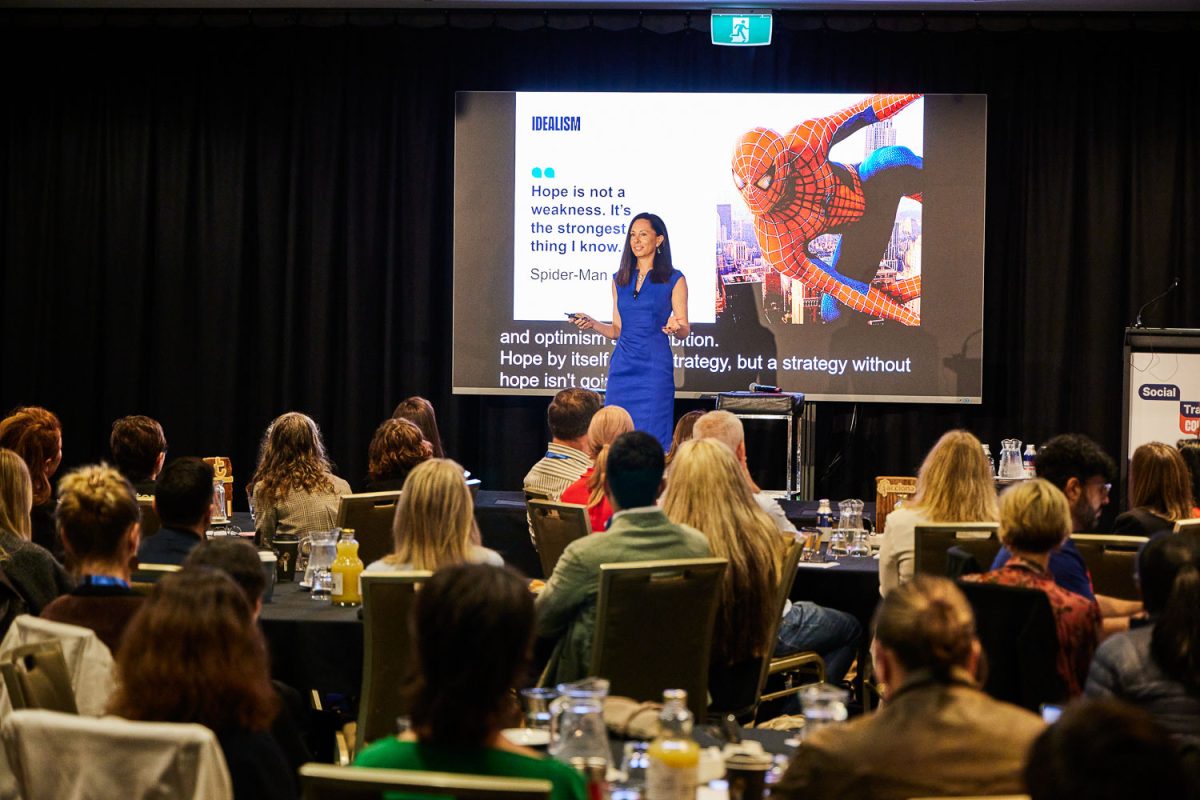
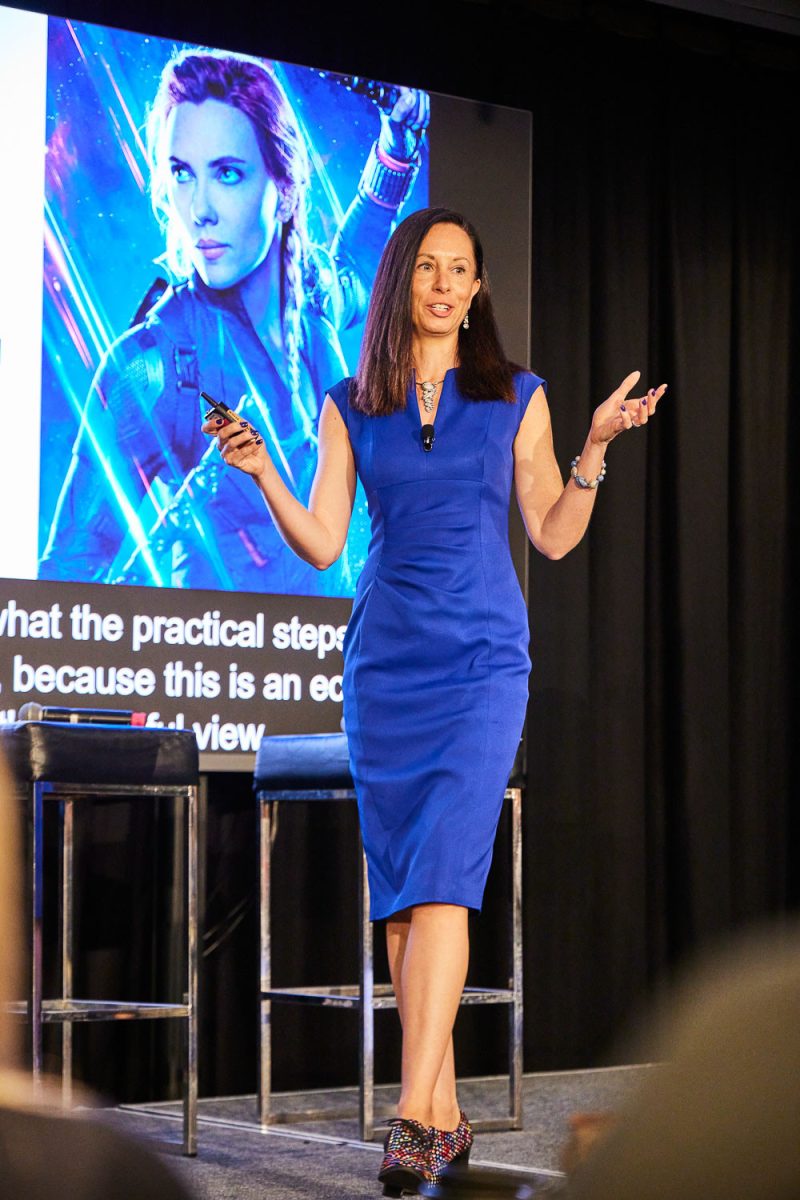
Photo: Tara Anderson, CEO Social Traders addressing the crowd at Convene 2026
Tara Anderson, CEO of Social Traders, opened Convene 2026 in Brisbane with a memory of listening to a speech by former Victorian Premier Joan Kirner. Whenever Kirner's granddaughter complained that something wasn't fair, Kirner asked her: what are you going to do about it?
“That was an inflection point for me,” Tara told the room. “That's why I'm here, and that's why you're all here, because we all want to do something about it.”
Business has more power to answer that question than most. Every organisation buys goods and services, and every purchase can create jobs and opportunity for people the economy leaves behind.
Tara's keynote set out how to put that power to use: pair hope with a strategy, change business from the inside and work together rather than compete.
Practical idealism
Tara is a self-declared optimist. Because when it comes to our biggest challenges, optimism is a requirement.
“Idealism is exactly what's needed. It's not naive. It's necessary,” she said. “Hope by itself isn't a strategy, but a strategy without hope won't get us anywhere.”
The idealism she means comes with a plan. “There's no point having a vision without a plan. Idealists have to be realists.” For business, that plan often starts with something it already does every day.
Get curious about the “but”
Most businesses will back social impact in business. Acting on it is where things stall. Tara described a recent meeting where she pitched social procurement and had the response: “We don't disagree with any of that... but...”
“The 'but' is the thing that we need to get curious about,” she said.
Tara outlined two ways through.
Meet people where they are. Social Traders sees four motivations for change inside organisations. Some people act because regulation requires it. Some start there, see the results and become internal champions. Some have a personal connection to the issue. And some, often in the C-suite or on boards, care about the legacy they leave.
“We need to understand the people that we're talking to in order to change minds,” Tara said. Sometimes that means leaning away from what matters to us and towards what matters for others.
Create kinks in the system. Tara called these “stealth moves”. For example social enterprise flips traditional business by making business the means rather than the end. Social procurement takes something every business does every day, buying, and redirects that value to social benefit suppliers.
A bold vision, backed by the numbers
Business and government have spent $1.4 billion with certified social enterprises since 2018. The spend keeps climbing, which shows the kink in the system is working.
Social Traders now wants to grow the social value figure to $8 billion by 2035. Not just in procurement spend, but across the full spectrum of social performance in business: employees, suppliers, customers and communities.
Social enterprises are ready to meet that demand. Tara shared a preview of the 2026 Report on Identified Social Enterprises (RISE). It shows that 61% of social enterprises make a profit, which is a higher share than other businesses. They also put 18% of their revenue into impact costs, and 46% of their employees would otherwise be shut out of work.
The full report launches on 19 November. Register today.
Why the work is worth doing
Tara acknowledged the work is hard, whether you run a social enterprise or champion social impact inside a business.
“If you're feeling that, you're not alone. You're not failing, you're facing headwinds. You're doing business as unusual.”
The work feels heavy because it matters. The biggest shifts in history are measured in centuries, so change is hard to see while it's happening. But it's all the small kinks in the system that matter. “Big change is only ever an accumulation of actions over time.”
Collaborate to progress, and find joy
The first lesson Tara learnt in her MBA was that business exists to make profit. The second was that anyone in your way is competition to take out. She asked the question: what if we stopped leaving our humanity at the door when we go to work?
When business and social enterprise work together, they answer that question. Business brings scale and buying power. Social enterprises bring the impact and the know-how to deliver it. As Tara put it, “profit and purpose aren't mutually exclusive, they can be mutually reinforcing.”
Collaboration also keeps people going. Tara pointed to the moment we all know, when you phone a friend in the sector on a rough day and hang up feeling lighter.
Her final message was about joy. “There is so much joy in this work, and sometimes we forget to see it.” When the work feels big, she suggested going small: celebrate a colleague's win, a new project or the person your work supports.
“We are all powerless to create change alone, but we are immensely powerful at creating change together.”
Let’s continue to put our optimism and energy to work, challenge the status quo and change how business gets done, until business with purpose is business as usual.
Join us for Convene 2027
Be the first to know about the latest developments and get early access to the best tickets when they drop.