Victoria's transport sector is turning social procurement into lasting impact

Kinetic and Social Traders bring together industry leaders to mark the Social Procurement Framework's progress, while discussing and shaping what comes next.
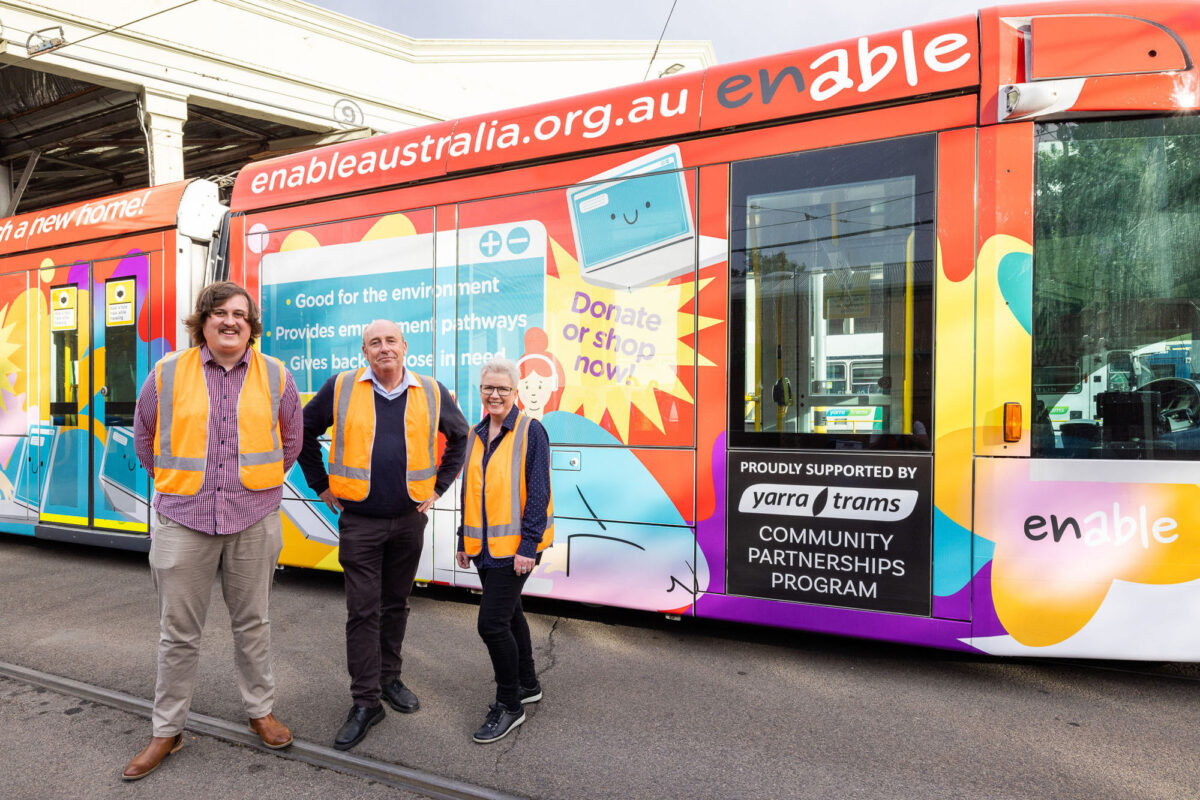
Photo: Enable
Victorian transport companies were among the early adopters of social procurement. When the Victorian Government Social Procurement Framework launched in 2018, companies like Kinetic recognised the competitive advantage it offered and committed to it. They have since embedded social procurement into their Victorian operations.
Kinetic’s social procurement journey
Kinetic has progressively strengthened its social procurement capability, embedding social value into procurement through dedicated resources, supplier engagement and measurable targets. Kinetic has committed to directing 3% of its total supplier spend nationwide to social enterprises by 2030, so its spending creates multiplier effects in the communities where it operates.
Kinetic educates its people on these commitments from recruitment and induction onward and reinforces that education through internal communication and training for people who influence employment, training and procurement decisions.
Kinetic recognised early that understanding, educating on, implementing and embedding social procurement required dedicated resourcing. Kinetic is one of the companies that helped create a profession that didn't exist before 2018. It's now driving change in business, building the capability of social enterprise suppliers in its supply chain, and creating value for the business through social procurement, well beyond compliance.
How the practice has matured
Social Traders and Kinetic convened a group of leaders in procurement and social impact, along with social enterprises in Victoria's transport sector to celebrate the achievements of the Social Procurement Framework.
Participants shared how far the practice has come:
- measurable targets for social procurement;
- tenders that ask how businesses are delivering social procurement, not whether they will;
- onboarding sessions to help suppliers succeed; and
- social enterprise inclusion built into contracts rather than treated as optional.
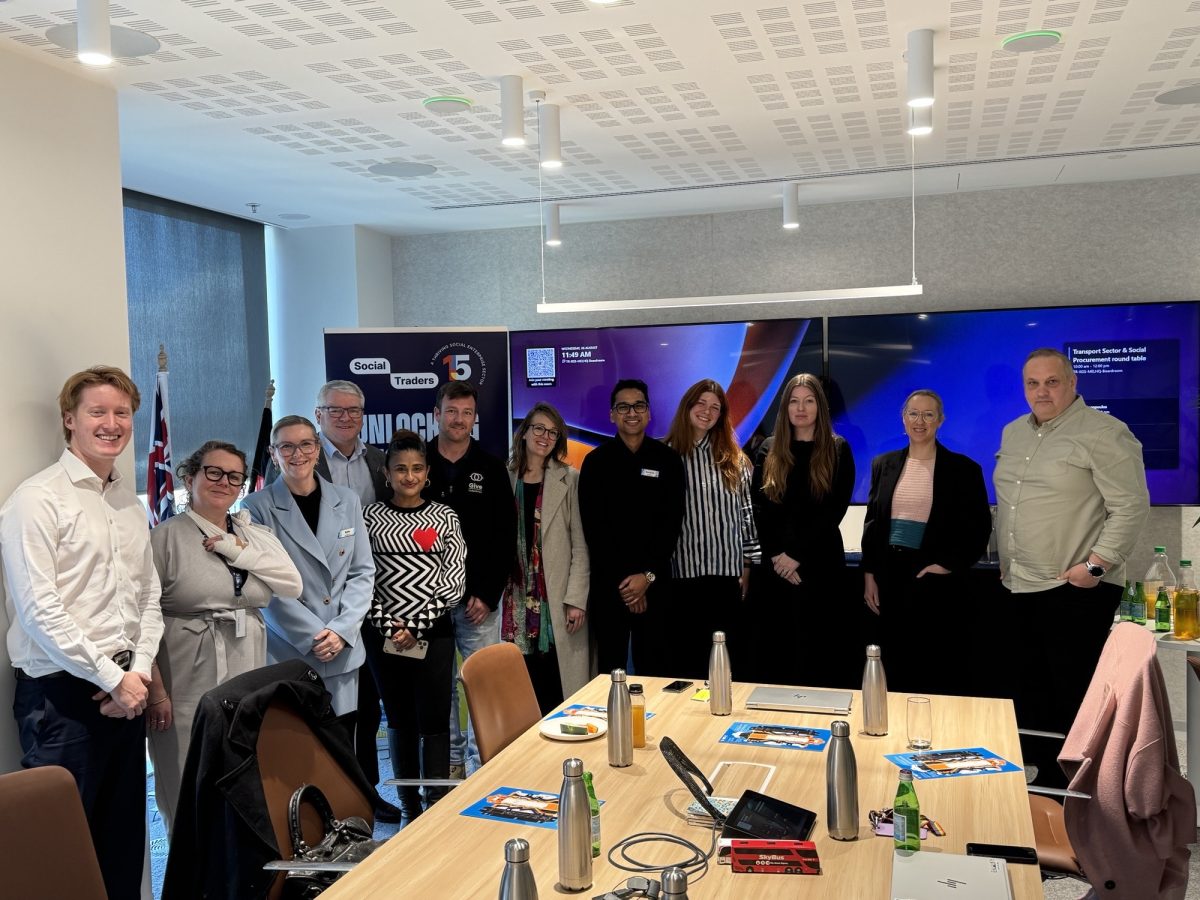
Roundtable participants
Lessons learnt, and challenges that remain
Participants discussed lessons learnt in embedding social procurement, noted current challenges, and shared how they turned collaboration into mutually beneficial outcomes.
For some organisations, social procurement has moved beyond hitting targets and into building lasting relationships with their social enterprise suppliers.
Challenges remain, though. Finding the right social enterprise supplier for a specific project or category can be hard, and so can gathering the evidence needed to show the impact of social spend and build the case for doing more.
Simple partnerships can multiply social value
Kinetic encouraged other organisations to find simple opportunities to partner with social enterprises that can make a big difference to the wider organisation. Kinetic partnered with certified social enterprise Pixii to provide period products at its bus depots, creating a more supportive and inclusive workplace for women. Staff feedback was unanimously positive.
Pixii donates 50% of its profits to help young girls, First Nations girls and young women get an education and move successfully into further work or study. By partnering with Pixii, Kinetic multiplied the social value it created: more satisfied and engaged employees, and more support for Pixii to help girls across the country.
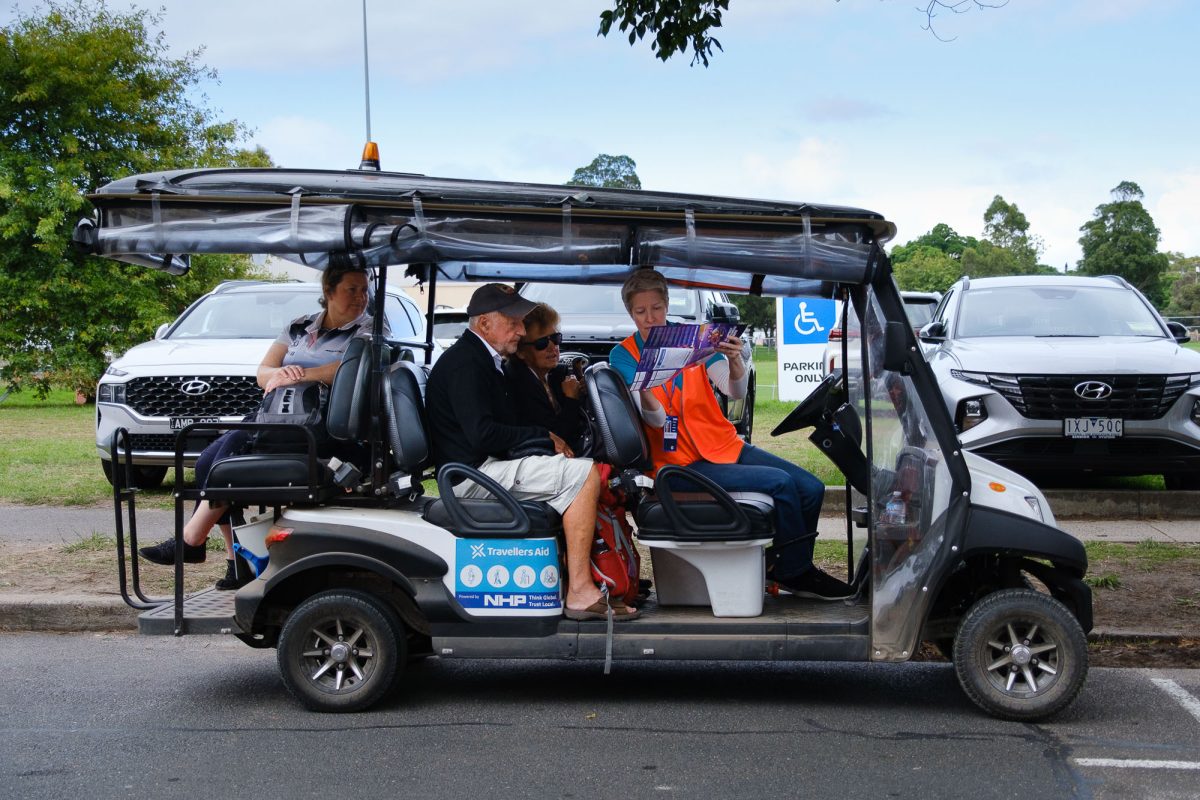
Travellers Aid
Accessibility and inclusion, adds to social procurement value
Social procurement delivers value across multiple areas for the transport industry, and accessibility and inclusion sit at the centre of it.
Kinetic is committed to being an accessible and inclusive transport provider. Public transport connects people to employment, education, healthcare and community participation, so Kinetic continually works to understand the diverse needs of its customers and make sure no one is excluded from using its services.
Through accessible vehicles, inclusive service delivery and ongoing engagement with customers and community stakeholders, Kinetic aims to create safe, welcoming and accessible journeys for everyone.
Guided by its Accessibility Action Plan, Kinetic's key initiatives to improve accessibility and inclusion include:
- disability awareness training for all frontline team members,
- regular meetings of its Accessibility Reference Group (ARG),
- social procurement opportunities that support people with disabilities,
- vehicles that meet DDA and DSAPT design standards, and
- participation in initiatives such as the Try Before You Ride program, which helps customers build confidence using public transport.
Supporting social enterprises to grow
Consistent long-term work, support to build the capability of social enterprises, and businesses willing to break large contracts into smaller packages so more social enterprises can compete: these were the main themes from the roundtable discussion.
One idea stood out. Businesses in the same sector could pool investment and resources to build the capability of specific social enterprises, helping them grow into a category they can own in that sector.
Some of the best outcomes come from simple moves, like bringing a social enterprise onsite early to help solve a problem and shape an innovative solution. Making it easier to work with social enterprises, and finding creative ways to do it, will keep social procurement moving forward in Victoria's transport sector.
"Social procurement in Victoria's transport sector has moved well past compliance, and the roundtable was a useful chance to compare notes with peers on where the value is actually created.
Thank you Social Traders for facilitating an open discussion, and for the ideas we'll take back into our own supply chain." – Harshith Vijay, Procurement Specialist at Kinetic
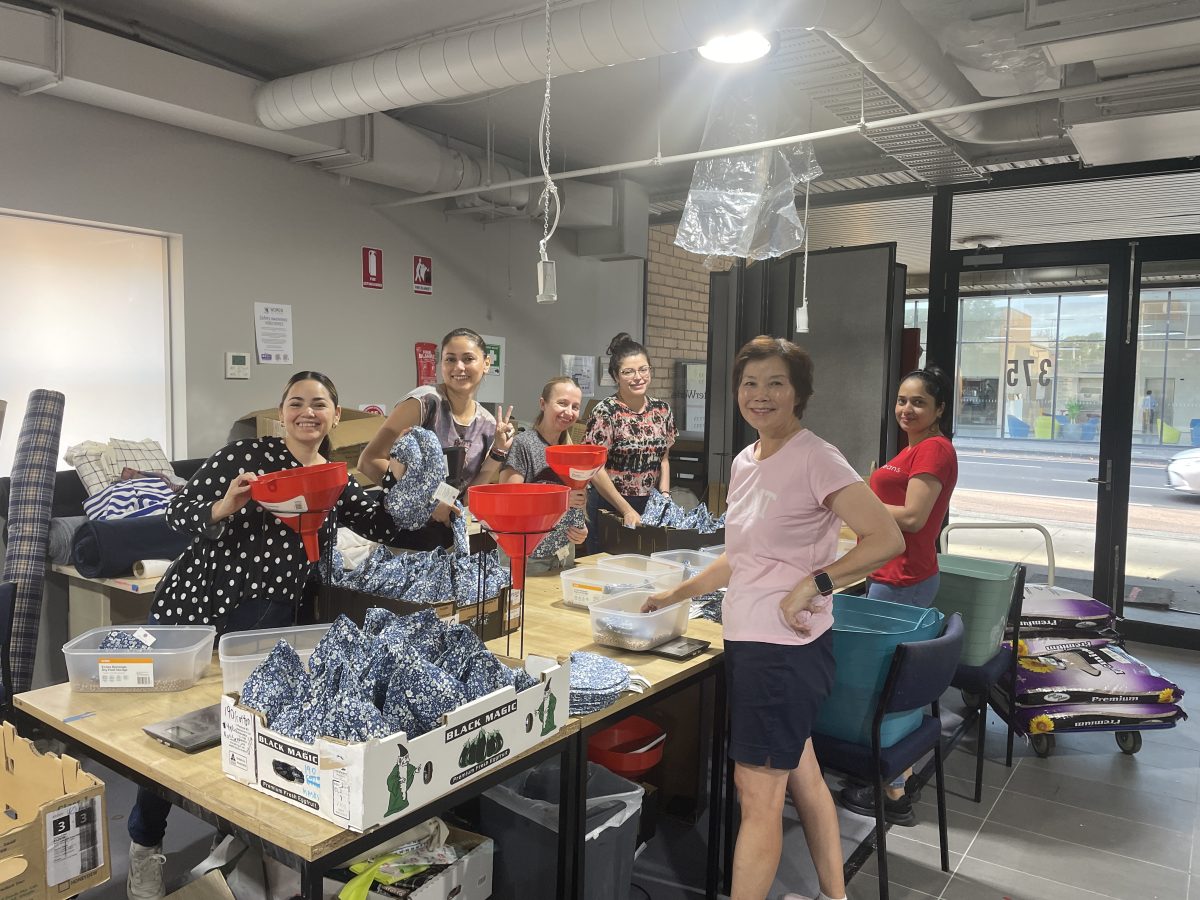
SisterWorks
Kinetic’s objective is to build a fairer economy and create lasting social, economic and environmental outcomes by increasing participation of Indigenous-owned businesses, social enterprises and other under-represented suppliers in our supply chain.
Through capability-building, shorter payment terms, mentoring and scalable contracting opportunities, Kinetic seeks to remove barriers to entry, support supplier growth, create employment opportunities and improve the livelihoods of the communities in which we live and operate.
"It's fantastic to see a member like Kinetic being so open with its peers. When transport companies come together to share what's working and think through challenges together, social procurement moves forward faster for everyone.
That kind of collaboration is what creates more social value for communities. When organisations partner with social enterprises, they’re using their purchasing power to help change lives, and build a fairer, more equitable and sustainable Australia." – Tara Anderson, CEO Social Traders
About Kinetic
Kinetic is the largest bus operator in Australasia and a leading multi-modal mass transit operator globally through its subsidiary Go-Ahead. Kinetic’s network includes over 37,000 people, over 470 trains and over 12,000 buses across 200 depots. Kinetic proudly operates over 1,900 zero-emission buses (ZEB) across 33 ZEB depots worldwide and is the leading ZEB operator in Australasia and the UK.
Kinetic’s mission is to enhance the communities in which it operates, and this is achieved through delivering on its sustainability priorities.
For more information, visit: www.wearekinetic.com
About Social Traders
Social Traders is a leading industry body in social enterprise and social performance. Established in 2008, we’ve been supporting more than 300 organisations to track, measure and improve their social performance including ASX-listed companies. Social Traders is also Australia’s certifier of over 750 social enterprises.
We’ve catalysed more than $1.4 billion in social procurement spend among member organisations with certified social enterprises over the last eight years, supporting 13,383 job pathways, 1 million training hours for marginalised communities and other impact outcomes. Learn more about our impact.
Get the latest industry snapshot on transport
71% of Social Traders members grew their social spend in FY25 from FY24. For buyers who return to a supplier, spend grows even further, up 47% in the second year.
Download the latest snapshot on social procurement in transport and logistics to unpack the latest trends. Start building a stronger social value strategy for your business.
- See the impact outcomes achieved with the social spend
- Discover the top spend categories driving positive change
- Find out which communities are benefiting from the social spend
You might also like
 Sector News
Best practice
What is social procurement?
Sector News
Best practice
What is social procurement?
Embed social suppliers into your supply chain to create social impact with your buying power.
 Sector News
2026 National Game Changer Award finalists revealed
Sector News
2026 National Game Changer Award finalists revealed
Recognising the trailblazers in social enterprise and social performance.
 Sector News
Case Studies
Delivering infrastructure with social impact
Sector News
Case Studies
Delivering infrastructure with social impact
John Holland and KADYN partnership breaking down barriers to employment, giving back to community.