What comes first, quality or sustainability?

Patagonia on why measurement matters for business.
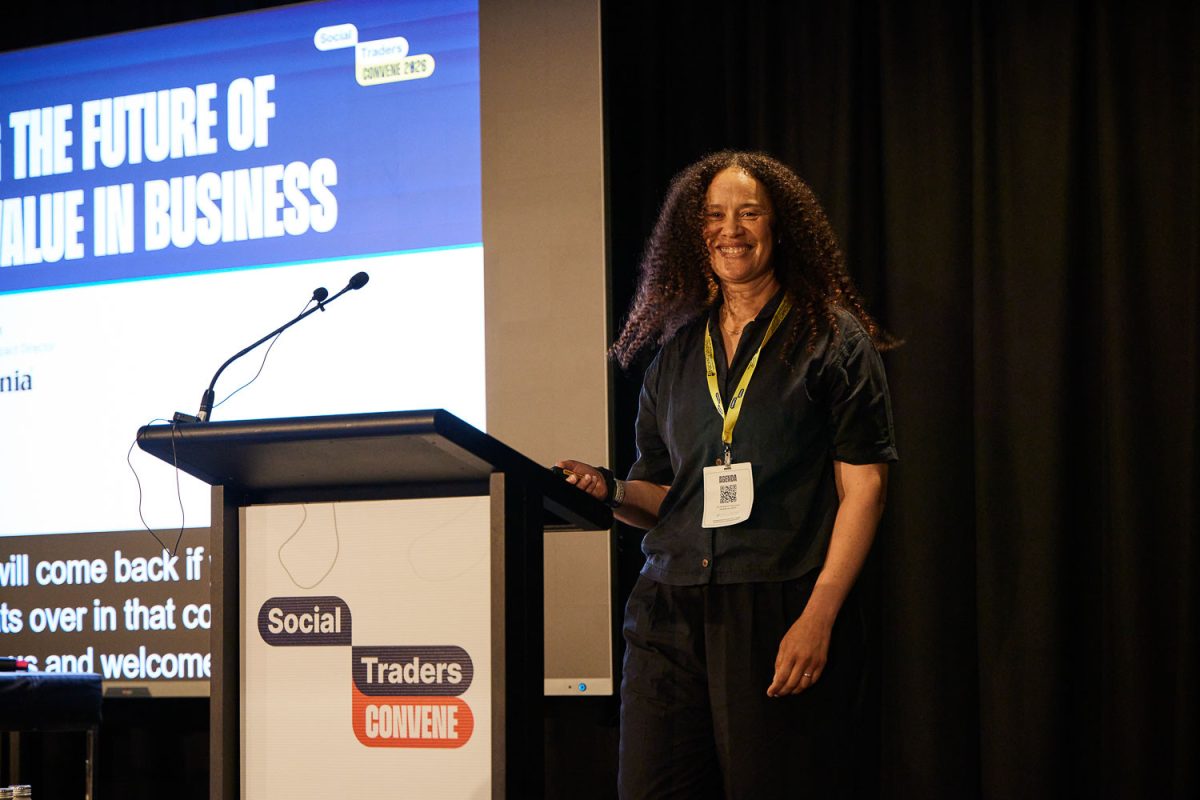
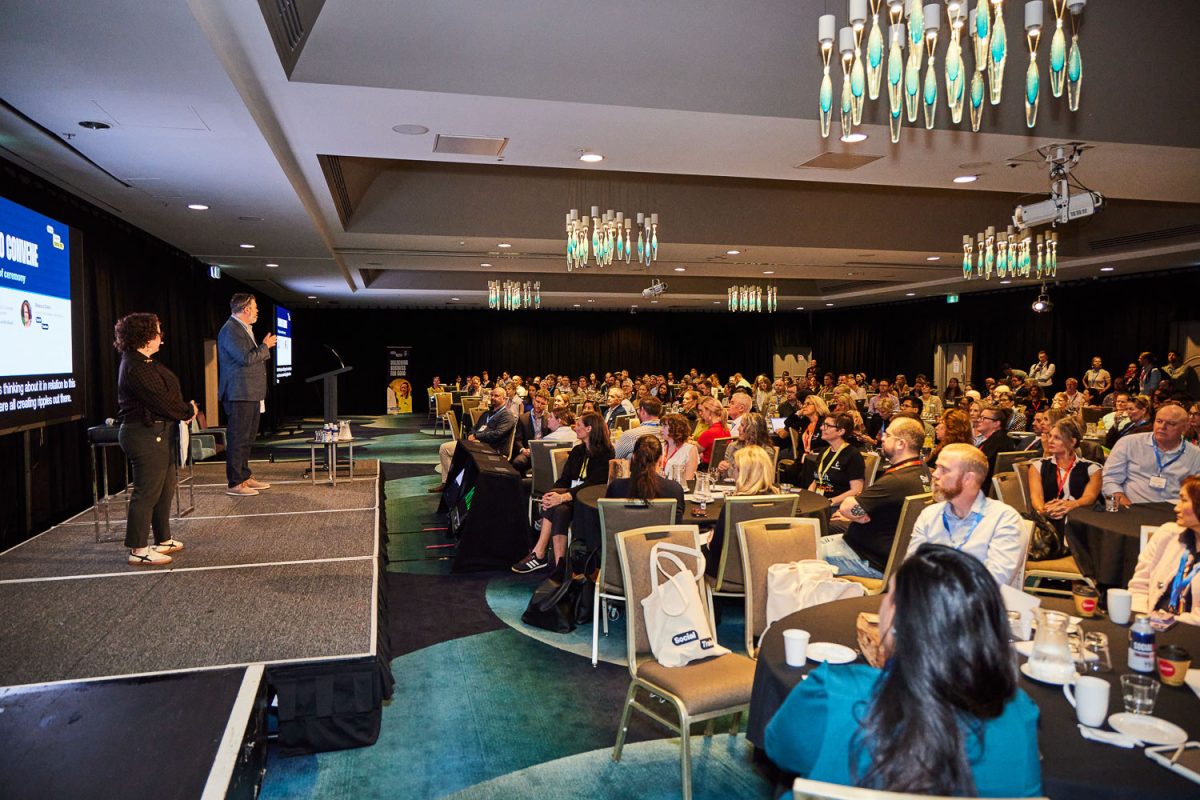
At Convene 2026, Naima Wilson from Patagonia Australia & Aotearoa shared how the brand measures quality, product by product, and why that comes before any sustainability claims. Here’s what her approach can teach us about measuring social performance.
In the early 1970s, Patagonia was just a handful of climbers and surfers working out of a tin shed in Ventura, California. Founder Yvon Chouinard and his mates set out to perfect every climbing tool there was, starting with pitons (the metal spikes climbers hammer into rock). The start-up was doing well, yet business growth came at an unexpected cost.
The team realised that pitons actually damaged the rock so that future climbers couldn’t use the same route. Against the advice given to him at the time, Yvon changed the product to create ‘clean’ climbing. This meant designing chocks that anchor into the rock without hammering and damaging it.
That decision was the start of Patagonia’s philosophy which still stands today, an unwavering focus on quality and a shared responsibility to leave a liveable planet for the next generation.
Measure it, or it stays an intention
As Patagonia grew, it needed a way to measure both the quality of its products and their impact on the environment. So a scorecard was created, which, in Naima’s words, was “quite an easy, but lengthy process”. The framework had to stand the test of time, be consistent in application yet simple enough to be understood and repeated.
Every product at Patagonia now starts at a 10 and loses points when it doesn't meet select criteria. Is it multifunctional? Is it repairable? Does it cause any unnecessary harm? Is it easy to care for? Any product scoring below 8 is either dropped or pushed to a later season to be improved.
Naima shared that the average sits at around 8.8, and the top performing product scores 9.6. Nothing gets a 10, because a 10 would mean durability, multiple uses and no built-in obsolescence, made with the smallest possible use of resources.
For social enterprises, there is a practical truth in this example. Values stack up when there is a clear test, applied consistently, that decides what makes the cut. It’s not just about the product's promise, but its tangible benefits. This framework can also be applied to the customer's or buyer's point of view. If impact can be measured, reported, and proven, then it’s worth the investment.
Quality is how you do business
"Quality isn't just a button that stays on a shirt longer. It's how you do business, how you look after your people and community, and how you advocate for the causes you believe in."
For Patagonia, quality means manufacturing in Fair Trade Certified factories, using recycled materials, making rainwear without forever chemicals and wetsuits from neoprene-free rubber.
It also means being honest about the tension in the model. Patagonia doesn't use the word "sustainable" in its communication. As Naima put it,
"We're an apparel manufacturer, and nothing we do is sustainable. But at every step, we try to make the most responsible decision."
The same standard applies to the stories Patagonia tells. "Content is easy to make, but stories are hard to tell," Naima said, and stories can make a real difference. Patagonia talks to its customers as friends and equals, because persuading people to take action starts with building their trust.
Business as a tool for change
In 2018, Patagonia changed its mission statement to: "We're in business to save our home planet." Naima admitted it intimidated the team at first. But it puts purpose at the centre of every decision, and the words "in business" matter most to her. They show that business can be a tool for change, with influence that reaches well beyond its own customers and across its industry and networks.
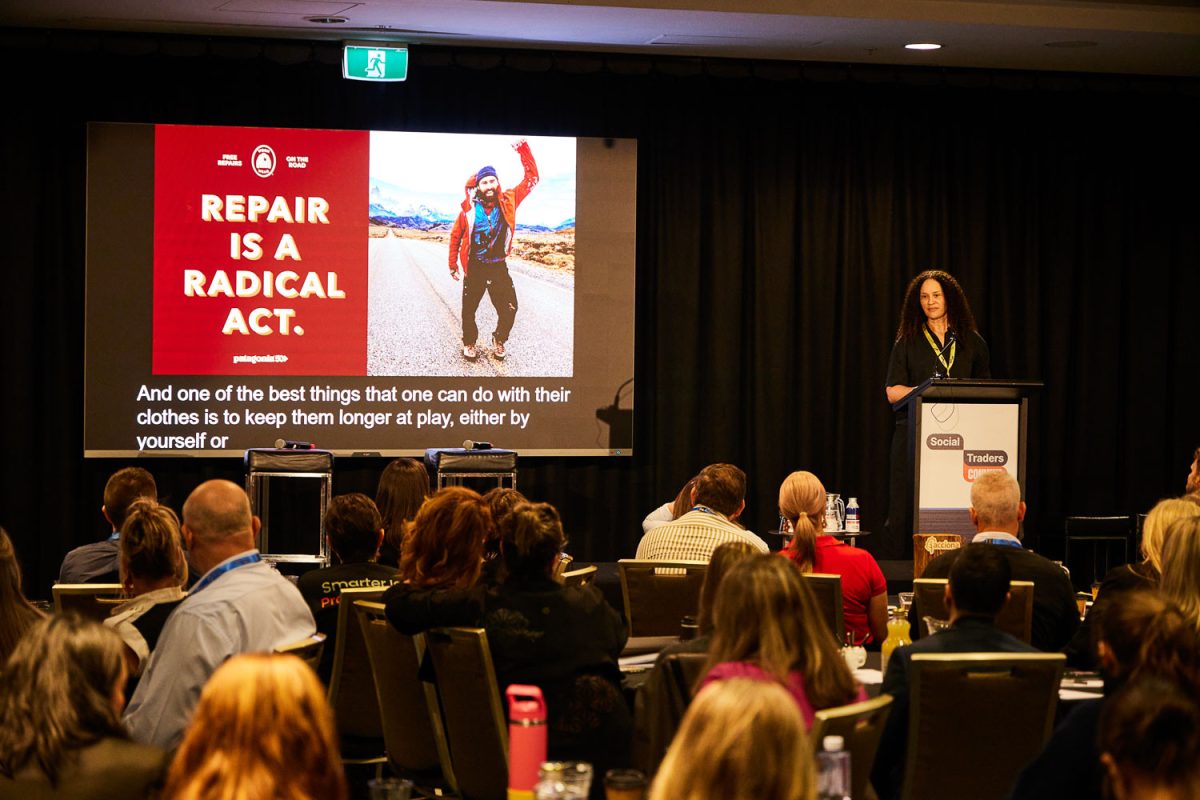
Yet a mission statement is one thing and action is another. Patagonia actually encourages customers to only buy what they need and keep their clothes in use for longer. A message willing put in their own advertising, once famously telling shoppers, 'not to buy this jacket'. Globally it repairs over 200,000 garments a year, and close to 10,000 in Australia.
"We've become a society of product consumers rather than product owners. So let's all become product owners, and let's not burden the planet with things we don't need."
Who is a business really responsible to?
Naima closed with a question from Yvon. Is a business responsible to its customers, its shareholders or its employees? Patagonia would argue none of the above. A business is responsible to its resource base. Without a healthy planet, there are no shareholders, no employees and no business.
When it comes to social performance, the ‘resource’ in question is both people and planet. Every organisation depends on its workers, suppliers and communities. This was a theme throughout Convene 2026, with keynote speaker Craig Foster AM sharing how we all have a responsibility to spend our personal social capital on people who don’t have it.
Patagonia's scorecard offers a practical place to start. Set a clear standard for what good looks like in your spend, apply it to every decision, and keep that framework firmly in place. For business and government organisations, this could translate to looking at who your supply chain employs and whether it’s creating social value or diminishing it.
Having a performance framework in place also echoes the point Queensland Treasurer the Honourable David Janetzki MP made at Convene. He acknowledged Social Traders' work in "collecting the right kind of data to make it easier for those of us in government wanting to make evidence-based decisions."
Whether it is a scorecard for a jacket or impact data across a whole sector, measuring what matters is what turns good intentions into decisions people can trust.
Naima's final words were a reminder that none of this happens alone. "If you want to go fast, go alone. If you want to go far, go together."
This article was written by Humans of Purpose in partnership with Social Traders.
Join us in Sydney for Convene 2027
Be the first to know about the latest developments and get early access to the best tickets when they drop.
Register your interest today. We hope to see you there!