Social value is no longer optional, now a key differentiator.

Discover why companies like Ventia and ISS are building this capability as reporting requirements tighten.

Photo: Help Enterprises
The businesses that are getting ahead have one thing in common
For years, social value sat in the "nice to do" column. That era is over.
Businesses that embed social value strategically win more contracts, attract stronger talent, and build the kind of stakeholder trust that sustains long-term performance. Those that treat it as a compliance exercise are falling behind.
This article covers what social value is, why regulatory requirements are tightening, how credible measurement works, and what two global organisations have already achieved by acting.
What Is Social Value?
Social value describes the broader impact an organisation creates beyond its core commercial activity: the economic, social, and environmental benefits it generates for people, communities, and the planet.
It includes the quality of jobs created and whether they reach the people who need them most, how procurement decisions support local economies and social enterprises, and how organisations contribute to community wellbeing and environmental stewardship.
Social value is not charity. It is the measurable, strategic output of how you run your business: who you employ, who you buy from, and how you engage with the communities you operate in.
The numbers make a compelling case.
- Businesses that win the social value portion of a public tender are twice as likely to win the overall contract.
- 70% of workers will not consider joining a company without a clear sense of purpose (Harvard Business Review).
- And 60% of consumer buying behaviour now turns on sustainability and ethical criteria, growing by 10% each year (PwC, 2023).
Measured well, social value translates directly into competitive advantage.
Why Regulatory Requirements Are Tightening
What was once voluntary is becoming mandatory. Three policy environments are reshaping expectations for organisations operating across the UK, Europe, and Australia.
United Kingdom: National Procurement Policy Statement 2025 The Labour Government has refreshed the Social Value Act and released a new Social Value Model, placing social value at the centre of all public spending decisions. Any organisation competing for government contracts must now demonstrate and quantify its social value contribution.
European Union: Corporate Sustainability Reporting Directive (CSRD) The EU now requires large organisations to disclose social and environmental impacts under the European Sustainability Reporting Standards (ESRS). These reporting requirements closely mirror established social value measurement frameworks, giving organisations that already measure rigorously a significant compliance advantage.
Australia: Rapidly Expanding Expectations The Australian market is accelerating its adoption of social value frameworks. Government procurement reform, the Modern Slavery Act 2018, Closing the Gap commitments, and growing ESG disclosure expectations from investors and regulators are converging to raise the bar. Major infrastructure projects and government contracts increasingly require suppliers to demonstrate and quantify their social and community impact.
Australia's early alignment with international social value measurement standards positions organisations that invest in robust frameworks now to meet mandatory reporting requirements with confidence as they expand.

Be Well Co
How to measure social value: The TOM system explained
Measuring social value with rigour requires a consistent, trusted framework. Social Value Portal developed the TOM System™, which has become the leading measurement standard adopted by organisations across the UK, Australia, and internationally.
The TOM System organises social value activity into a clear three-level structure:
- Themes: the strategic areas of social value you want to address
- Outcomes: the specific positive changes you aim to create
- Measures: the concrete actions you will take and track
Four themes structure the entire framework:
- Work: Employment, training, and skills opportunities
- Economy: Driving inclusive, local economic growth
- Community: Empowering communities and supporting wellbeing
- Planet: Environmental stewardship and net zero progress
Quantifying impact: Units and financial proxy values
The TOM System quantifies social value in two complementary ways.
Units capture the volume of activity: weeks of employment training delivered, tonnes of CO₂ reduced, and the number of people supported into work.
Financial proxy values assign a monetary equivalent to each action, calculated using authoritative national data sources including the OECD and the Australian Bureau of Statistics.
This dual approach enables organisations to make a clear, credible case to buyers, auditors, and investors. $100,000 contract that generates $120,000 of social value delivers a 20% social value-add, expressed in a methodology that stands up to scrutiny.
That is the difference between saying you care about community impact and proving it.
Social Value in action: Two organisations already leading
Ventia: $6.4 billion in Social Value measured
Ventia, Australia's leading infrastructure services provider, became the first APAC company to implement the TOM System. In 2025, Ventia quantified $6.4 billion in social value.
Ventia grounds its approach in five focus areas shaped by its culture, capabilities, customer priorities, and community needs: Health and Wellbeing, Community Engagement, Employment and Skills, Diversity and Inclusion, and Social Procurement.
Using Social Value Portal's platform, Ventia can demonstrate that over 99% of its spend goes to Australian suppliers. $118.3 million spent with Aboriginal & Torres Strait Islander businesses, $10.8 million spent with social enterprises and 87.6% of local employment supported.
CEO Dean Banks captures the intent clearly:
"Social Value for us is about improving the lives of people in the communities we serve and making sure that local money is spent wisely and reinvested in the local community, to make a lasting legacy that's more positive for future generations."
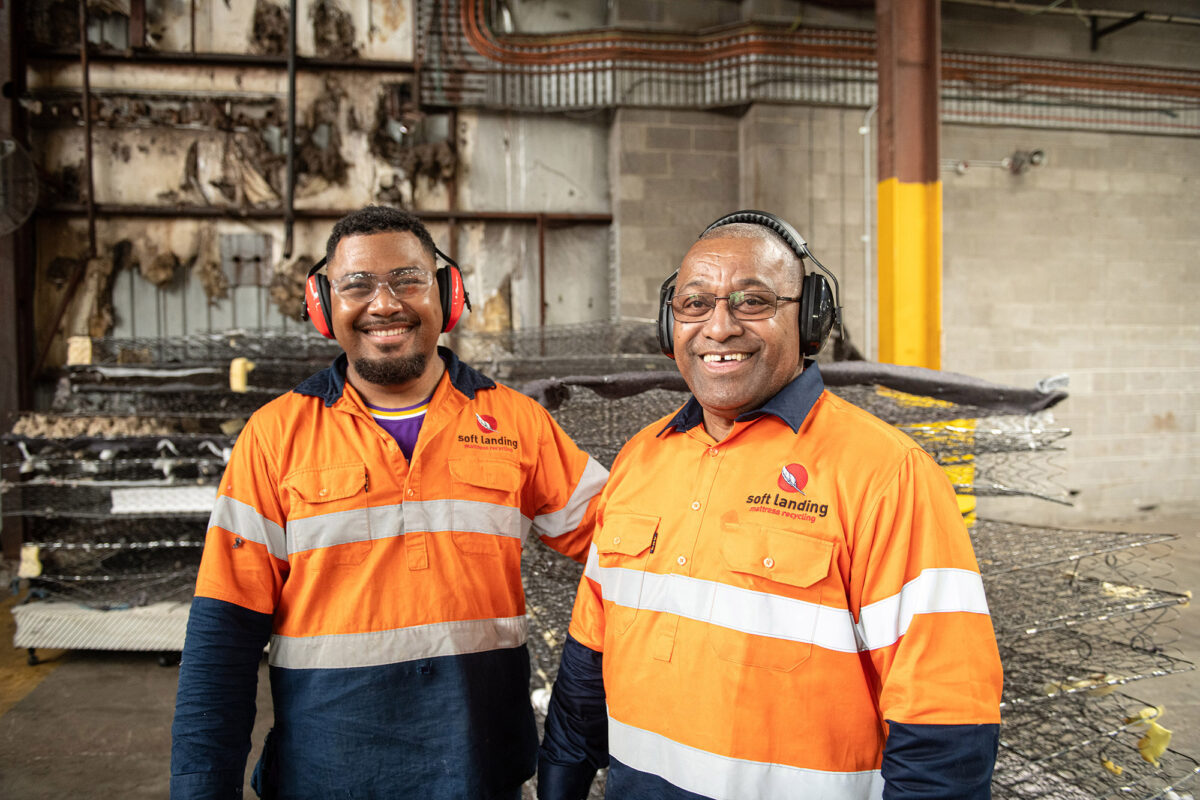
Soft Landing
ISS: Scaling Social Value measurement across borders
When Margot Slattery, Group Head of Social Sustainability and Inclusion joined ISS as five years ago, she found good work happening across multiple countries but no strategic framework to connect it. Regions operated in silos, and no consistent method existed to measure or compare impact.
The partnership with Social Value Portal changed that. ISS, a leading global workplace experience and facility services company, launched a five-country pilot in 2025 and plans to expand to 15 countries by 2027, plus the UK. The phased approach builds team capability and embeds measurement as an operational practice rather than a reporting add-on.
ISS also uses international dollar benchmarking to compare social value across geographically diverse markets, enabling genuine global performance tracking, with long-term plans to extend measurement into the supply chain.
In a webinar session with Social Traders, Margot shared that in Australia alone, ISS generated over $1.3 billion in social value in the past year across four areas:
- General employment: $805 million, supporting 7,500 employees with stable jobs
- Supplier spend: $493 million, engaging local and small suppliers including Indigenous businesses
- Third-sector partnerships: $622 million through collaborative community impact
- Indigenous employment: $13 million, with 123 full-time roles for Aboriginal and Torres Strait Islander peoples
Margot frames the motivation well:
"Social sustainability are woven into our group strategy. It's not just nice words, it's not something we want to tick a box on. It goes deeper than that, back to 125 years of heritage, really making a difference in society about what we do as a service and the impact of it.
"The social sustainability agenda is rapidly gaining momentum, prompting many of our global customers to prioritise social actions in their strategies and concrete tenders. This increases the need for ISS to provide global data and adopt a shared language to clearly demonstrate the social impact of our initiatives across borders, expressed as a monetary value.
By translating social value into monetary terms, we believe we can bring social sustainability even more to the forefront of global business."
Social Value Portal and Social Traders: Australia’s measurement solution
Social Value Portal, the organisation behind the TOM System, partners with Social Traders to deliver world-class Social Value measurement with local expertise and context.
Together, we’re giving organisations a credible, comparable dollar figure to a broad range of business activities delivering social impact – along with the framework, technology, and support needed to win contracts, satisfy investors, and demonstrate genuine community impact.
What Social Value Portal and the TOM System deliver
- A standardised, internationally recognised measurement framework that enables consistent reporting across your portfolio
- Financial proxy values calibrated to Australian economic data for credible, locally relevant Social Value monetisation
- A technology platform that captures, tracks, and reports Social Value in real time
- Full alignment with procurement requirements, ESG reporting frameworks, and investor disclosure expectations
- Expert support and training to build Social Value capability across your organisation
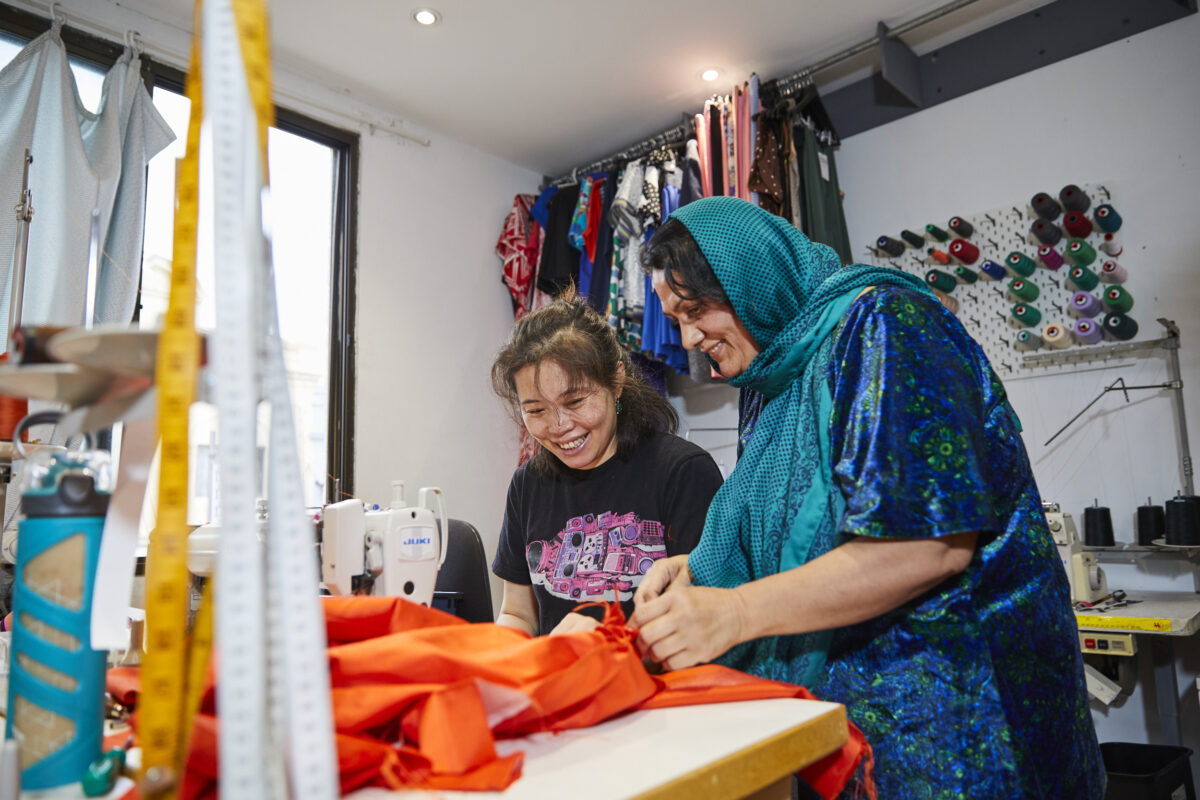
The Social Outfit
Why organisations should act now
Ventia and ISS represent a growing group of organisations that have moved from aspiration to accountability, using that accountability to win work, differentiate from competitors, and attract people who want to work for businesses with purpose.
Social value measurement is moving from best practice to baseline requirement. Organisations that wait for mandates will spend their first years catching up. Those that build measurement capability now will spend that time building advantage.
The tools exist and the frameworks are proven. The question is whether your organisation is measuring what it is worth consistently, and credibly.
Get in touch today to and let's discuss how we can support your business to lead in social value.
You might also like
 Sector News
Convene 2026: Social Value Through Business
Sector News
Convene 2026: Social Value Through Business
Social performance is now part of business strategy, connecting social value with business value. That's why it's the theme of our conference this year.
 Sector News
Trends & Insights
Top trends: What Social Traders data reveals about where social procurement is headed
Sector News
Trends & Insights
Top trends: What Social Traders data reveals about where social procurement is headed
Social procurement, a strategic business lever for social value. Photo: Help Enterprises
 Sector News
Best practice
She didn't wait for policy. She just started buying differently.
Sector News
Best practice
She didn't wait for policy. She just started buying differently.
Nicole Donnison at Icon, turning contracts into community impact.