Top trends: What Social Traders data reveals about where social procurement is headed

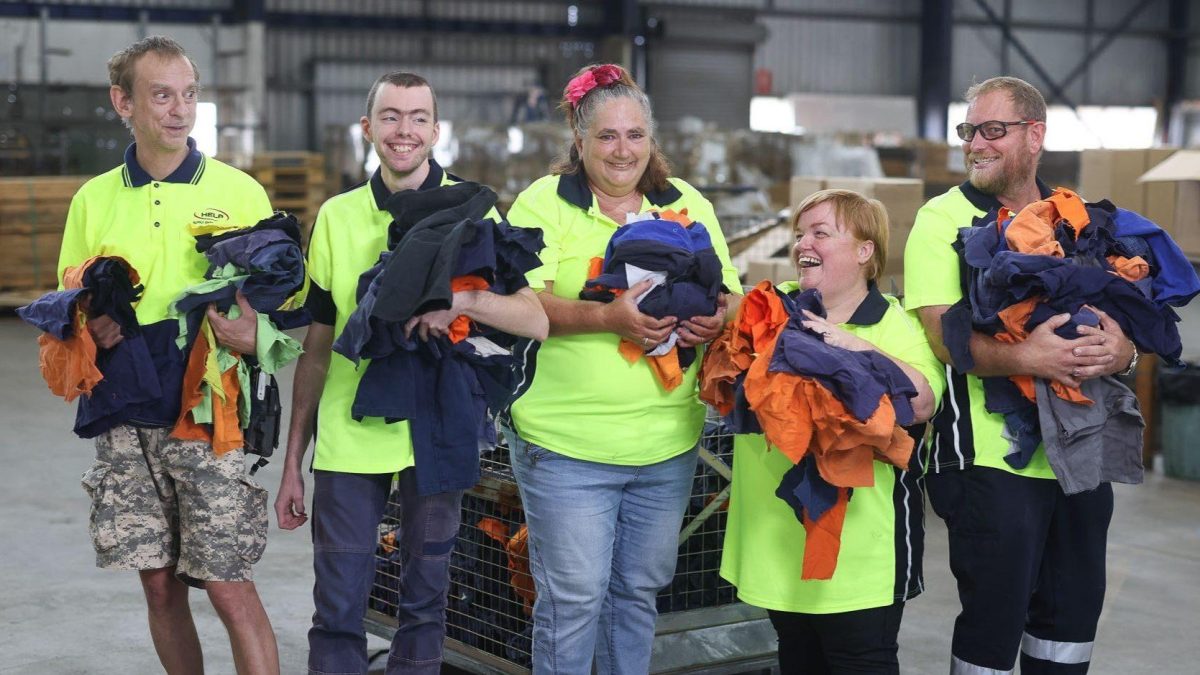
Social procurement, a strategic business lever for social value. Photo: Help Enterprises
For eight years, Social Traders has tracked the spend Australian businesses and governments direct toward certified social enterprises.
The FY25 numbers are in, and they tell a story that goes well beyond a single record-breaking year.
$304 million was spent with certified social enterprises in FY25 alone, an 18% increase on FY24 and the highest single-year total on record. The cumulative eight-year figure now sits at more than $1.4 billion, with a 35% average annual growth rate that has held steady over time. That last point matters. Most new initiatives see momentum dip over time, but social procurement continues to grow.
What is driving this momentum, and what does it mean for organisations that have yet to make social performance a strategic priority?
Social procurement is a strategic business lever that creates social value
More organisations are realising the power of using their spend to create social value. They’re activating their supply chains by partnering with certified social enterprises to connect social value with business value.
Social enterprises employ people who face the greatest barriers to work: refugees, people living with disability, those recovering from long-term unemployment. They supply goods and services that meet community needs in underserved markets, and they offer environmental solutions.
By embedding social enterprises into a supply chain, an organisation gets the same quality goods and services it would procure anyway and generates social and environmental value in the same transaction.
By the numbers, FY25 at a glace
- $304 million spent with certified social enterprises, a record single-year total, up 18% on FY24
- $1.4 billion cumulative spend since FY18, with 35% average annual growth
- 151 business and government members | 735 certified social enterprises
- 71% of members increased their spend year-on-year in FY25
Our reporting capabilities help members turn their spend into tangible verified impact outcomes, which supports their business case to do more.
Across eight years, Social Traders member organisations have supported 13,383 jobs for people who face barriers to employment, one million training hours, $103 million in community goods and services, and 68,050 tonnes of waste diverted from landfill.
In FY25, spend directed to marginalised women grew 56% year-on-year to $47.1 million, while spend supporting Aboriginal and Torres Strait Islander communities grew 69% to $18.8 million.
These are not incidental outcomes. They are the direct result of procurement decisions made by organisations that have embedded social performance into their supply chain strategy, and they are leading in their industry because of it.
“35% average annual growth over eight years is not a trend. It’s a structural shift in how leading organisations think about their supply chains as a social performance driver. The businesses experiencing that growth aren’t doing it as a tick box. They’re doing it because it’s delivering real value, commercially and socially.” — Tara Anderson, CEO, Social Traders
More industries are getting on board
Property and infrastructure built the foundations of social procurement in Australia. These sectors remain the largest contributors by spend.
But the membership growth story in FY25 sits elsewhere: the banking, consulting, energy, education, FMCG and transport sectors have all grown.
The energy sector is a useful illustration. New energy sector members have joined Social Traders every year for the past four years. This is not coincidence; it is a pattern of organisations watching peers move and deciding they do not want to be last.
The questions new sectors ask when they engage with Social Traders have also changed. Five years ago, they were asking why should we do this? Now they are asking how does this work and what’s the social value we can create? The business case is more widely understood.
Spotlight: Breaking the mould, an award-winning strategy
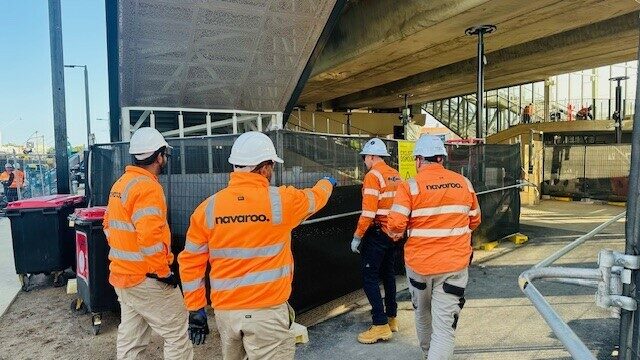
Navaroo
When Southern Program Alliance (SPA) – a joint venture comprised of ACCIONA (constructor), WSP, Metro Trains Melbourne (MTM), and the Level Crossing Removal Project (LXRP) – lost its landscaping supplier on the Parkdale Level Crossing Removal Project, the team had two choices: take the safe route and find another traditional subcontractor or seize the opportunity and do something truly different.
They chose different – and it paid off.
At $3.8 million, this was the first time SPA had awarded a major landscaping package to a social enterprise. For Navaroo, it was transformative and the results are compelling. This included five skilled migrants gained more than 3,891 hours of meaningful work, plus 185 hours of training; and Navaroo’s supply chain spend included $224,000 with other social enterprises, amplifying impact.
“For us, it was more than a contract. It was proof that if you back people with the right support, they rise, and the work speaks for itself.” – Hashan Senarathna, Director, Navaroo
That decision has since earned ACCIONA – SPA and Navaroo the 2025 National Social Procurement Impact Partnership Game Changer Award, setting a new benchmark for what bold, values-driven procurement can achieve.
Businesses are activating social procurement in a wider range of spend categories
The categories historically associated with social procurement were catering and cleaning. While both are still relevant, neither is where there is growth. The growth is in engineering, technology, architecture, planning, community services, and building trades.
Engineering and tech services moved from $155,000 in FY20 to $11.6 million in FY25. Architecture, planning and design grew from $80,000 to $2.1 million in the same period, while community and social services reached $1.6 million from just $22,000.
Building trades, repairs and maintenance, the largest category by volume, reached $62 million in FY25, up from $1.8 million five years ago.
This category diversification signals something important: certified social enterprises are no longer positioned solely as providers of ancillary services. They are competing and winning on core procurement categories.
For buyers, this means the question is less “can we find a certified social enterprise supplier?” It’s increasingly “which certified social enterprise in Australia is right for this contract?”
Spotlight: Ventia and Australian Spatial Analytics
Since 2021, members of Australian Spatial Analytics (ASA) – a certified social enterprise dedicated to training and employing young autistic adults in data analytics – have been partnering with Ventia, a leading infrastructure service provider.
The unemployment rate for neurodivergent adults in Australia is at 34% – 10 times the national average. ASA is changing this, with 80% of their workforce identify as neurodivergent.
The team started working with Ventia’s Queensland and Victorian Telecommunications project teams to undertake design work on the nbn project. They started working on revised set of drawings that a subcontractor submits upon completion of a project, factoring in all modifications and changes required during the build. The scope of work also grew to include more elements of the design process.
This partnership won the 2022 Social Traders National Game Changer Awards for Queensland and the Northern Territory, recognised for delivering positive impact through social procurement.

Australian Spatial Analytics
Compliance opened the door. ESG is now driving the agenda
Five years ago, most organisations that joined Social Traders were responding to policy. Tender weightings, mandatory government procurement frameworks and the Victorian Social Procurement Framework were the main catalyst. In 2020, 54% of new Social Traders members cited compliance as their primary reason for joining. By 2025, that number has dropped to 45%.
ESG and sustainability goals now account for 38% of new member motivations. Between the two motivations, the gap has narrowed from 16% to just 7% in five years. The trajectory is clear. The organisations delivering social procurement now are not here because they must. They are here because social performance through their supply chain is becoming central to how they manage and report on their ESG goals.
That shift has commercial implications. Businesses that can demonstrate credible, measurable social outcomes are gaining competitive advantage: attracting talent, strengthening stakeholder relationships, and mitigating supply chain risk. Social performance is no longer a reporting line item. It is becoming a marker of industry leadership.
Social performance is no longer a reporting line item. It is becoming a marker of industry leadership.
One company clearly leading social performance through their supply chain is John Holland. For the second year running, John Holland has been recognised for having the most diverse social supply chain among Social Traders members. In FY25, they’ve spent with 54 certified social enterprises, demonstrating their commitment to supplier diversity to create social value.
Businesses are increasing social procurement every year
Social Traders member organisations who spent with certified social enterprises two years in a row increased their spend by 47% in the second year.
71% of active members grew their spend in FY25. More than 25 organisations exceeded $1 million in annual spend, a threshold that signals systemic commitment, not ad hoc participation. The organisations leading social performance through their supply chain are as follows.
FY25 social procurement leaders
$5 million+ spent with certified social enterprises:
ACCIONA, Ambulance Victoria, ANZ, CPB Contractors, Downer EDI, Fulton Hogan, John Holland, Laing O’Rourke, Ambulance Victoria, Victorian Infrastructure Delivery Authority and Visy Industries.
$1 million - $5 million spent with certified social enterprises:
Adelaide University, Bild Group, Built, Charter Hall, City of Moreton Bay, Conduent, CSR, Eastern Freeway BTA, Kinetic Group Services, Lendlease, Macquarie Group, McConnell Dowell, Mirvac, University of New South Wales, Ventia and Westpac.
Spotlight: FY25 Top Spender CPB Contractors
CPB Contractors spent $34.2 million spent with certified social enterprises in FY25, earning them the Top Social Spender acknowledgement. An example of their success can be seen in their partnership with CareerSeekers, a certified social enterprise supporting refugees and people seeking asylum into professional employment.
What began as a modest commercial arrangement between CPB Contractors and CareerSeekers is now a strategic, values‑aligned workforce initiative.
The partnership is in its third-year agreement and has:
- hosted 148 internships for 79 participants, with
- 57 securing permanent employment outcomes, representing a 72% conversion rate
In 2024 alone, 22 interns joined the business with 5 already securing ongoing roles.
These outcomes position the partnership not just as a program, but as a proven model for inclusive workforce development, which has entered its third three‑year agreement.
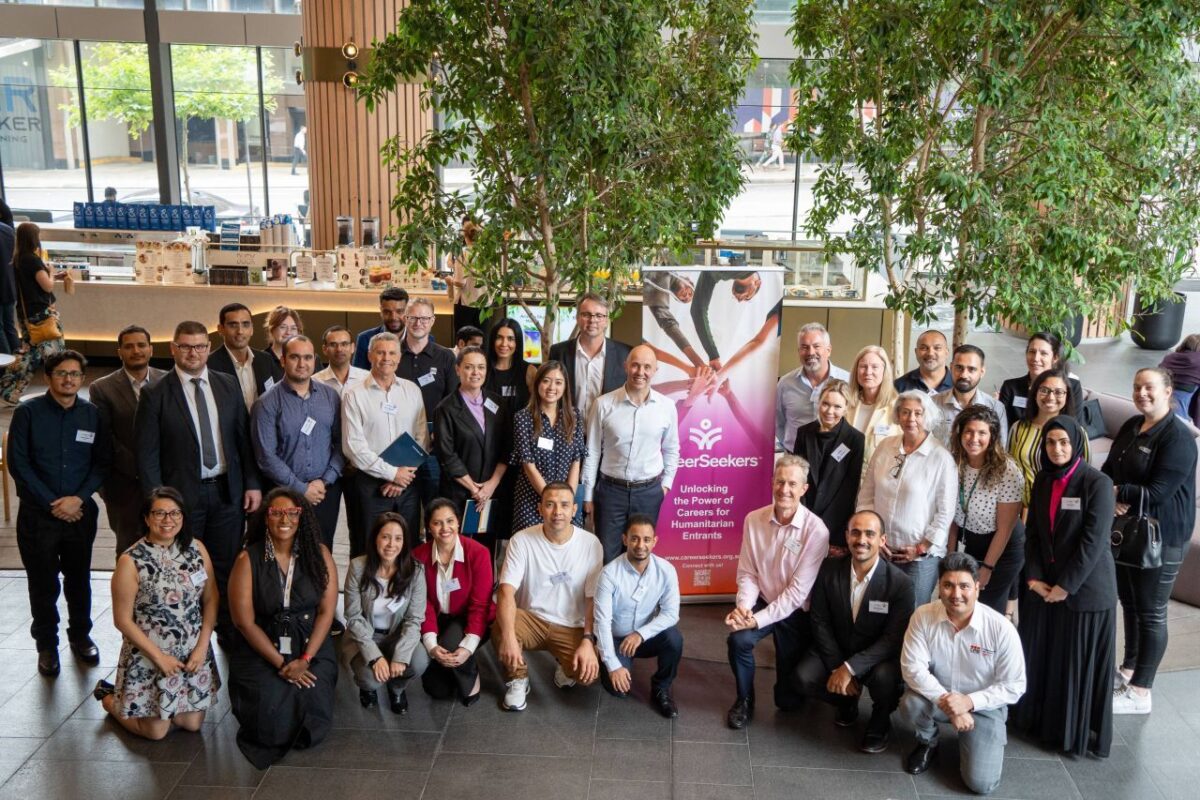
CPB Contractors & CareerSeekers
Don't fall behind, join the industry leaders growing competitive advantage
Social Traders membership gives organisations access to more than 760 certified social enterprises across every major procurement category, a framework for tracking and reporting social spend, peer and industry benchmarking, and supplier development support.
The certification standard provides assurance: every certified supplier has been independently assessed against international standards and rigorous commercial and social criteria.
“Australia is moving faster on this than anywhere else in the world. We have the certified supplier base, the member network, and eight years of data to prove it works. The question for any organisation now isn’t whether to embed social performance; it’s how quickly they can get moving.” — Tara Anderson, CEO, Social Traders
The organisations shaping the social performance leadership position are not waiting for policy to require it, and they are not pulling back. They are investing in it because the commercial, reputational and human case is compelling and because the infrastructure to do it well now exists.
The time to lead in social performance is now. Join the leaders of your industry with us.
Want to know your social performance score?
Find out where your organisations stands with this free assessment, and uncover opportunities to go further.
You might also like
 Sector News
Best practice
She didn't wait for policy. She just started buying differently.
Sector News
Best practice
She didn't wait for policy. She just started buying differently.
Nicole Donnison at Icon, turning contracts into community impact.
 Sector News
Trends & Insights
$1.4 billion and counting, Australian businesses reshaping the economy to focus on social performance
Sector News
Trends & Insights
$1.4 billion and counting, Australian businesses reshaping the economy to focus on social performance
Corporates directing billions into a new kind of supplier – social enterprises – to drive social performance through their supply chain. Photo: Clothing the Gaps.
 Best practice
The ESP Policy: What It Means for Organisations
Best practice
The ESP Policy: What It Means for Organisations
A practical guide to Australia's Environmentally Sustainable Procurement Policy