One introduction made a national impact

RCYCL’s greatest growth wasn't from households or retailers, but instead from an introduction made by Social Traders.
Social Traders is an industry body for social enterprise and social performance. We create a thriving sector by connecting social enterprises with corporates. These partnerships enable social enterprises to grow and support corporates to deliver more social impact - driving social performance further.
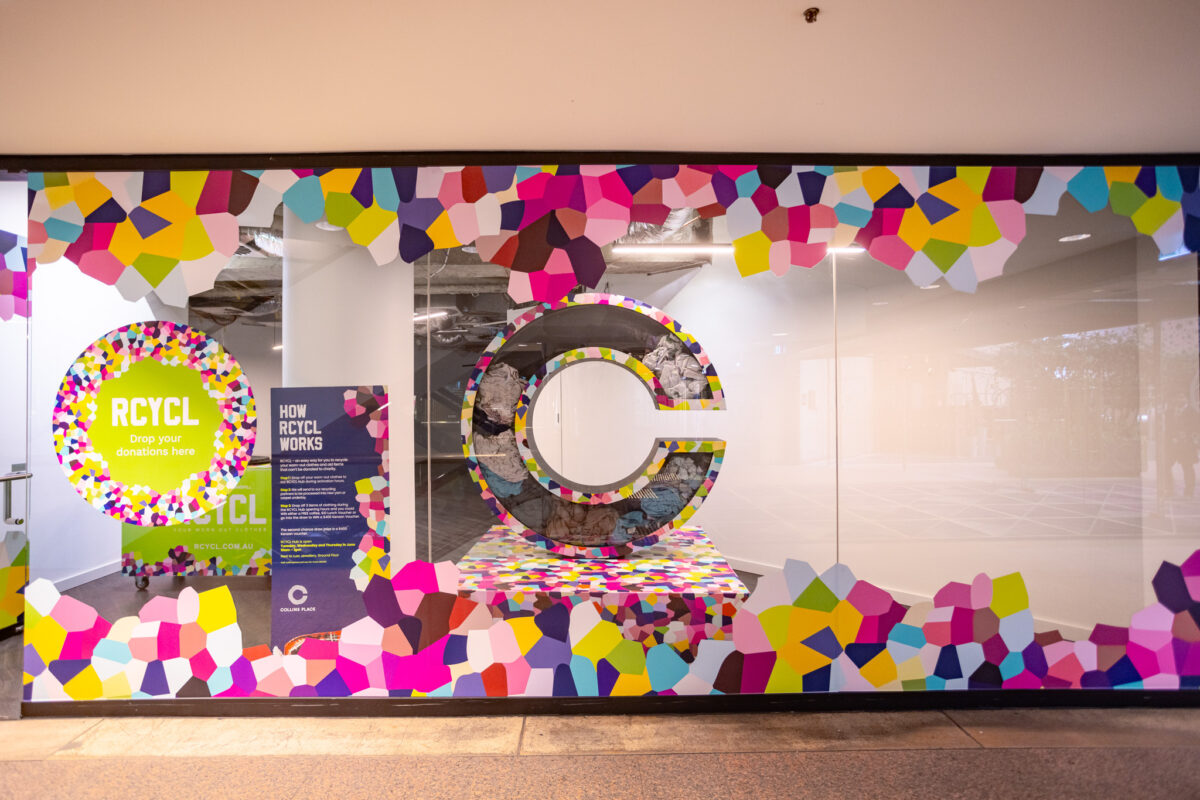
In this article, we spotlight RCYCL, a certified social enterprise diverting textile waste from landfill through scalable circular-economy solutions and how one introduction turned this startup into a national circular-economy partner.
From a wardrobe problem to a national solution
Belinda Paul did not intend to enter the waste game. She spent her career in fashion retail - immersed in colour palettes, fabrics and customer experience - until one persistent problem kept gnawing at her: What do Australians do with the clothes they can’t donate?
Not the clothes in good condition - the unwearables.
The torn pyjamas, threadbare T-shirts, worn-out uniforms, disintegrating kids’ clothes and end-of-life textiles that op shops cannot resell and households don’t want to throw in the bin.
The answer, she realised, was nothing. There was no system. So, she built one.
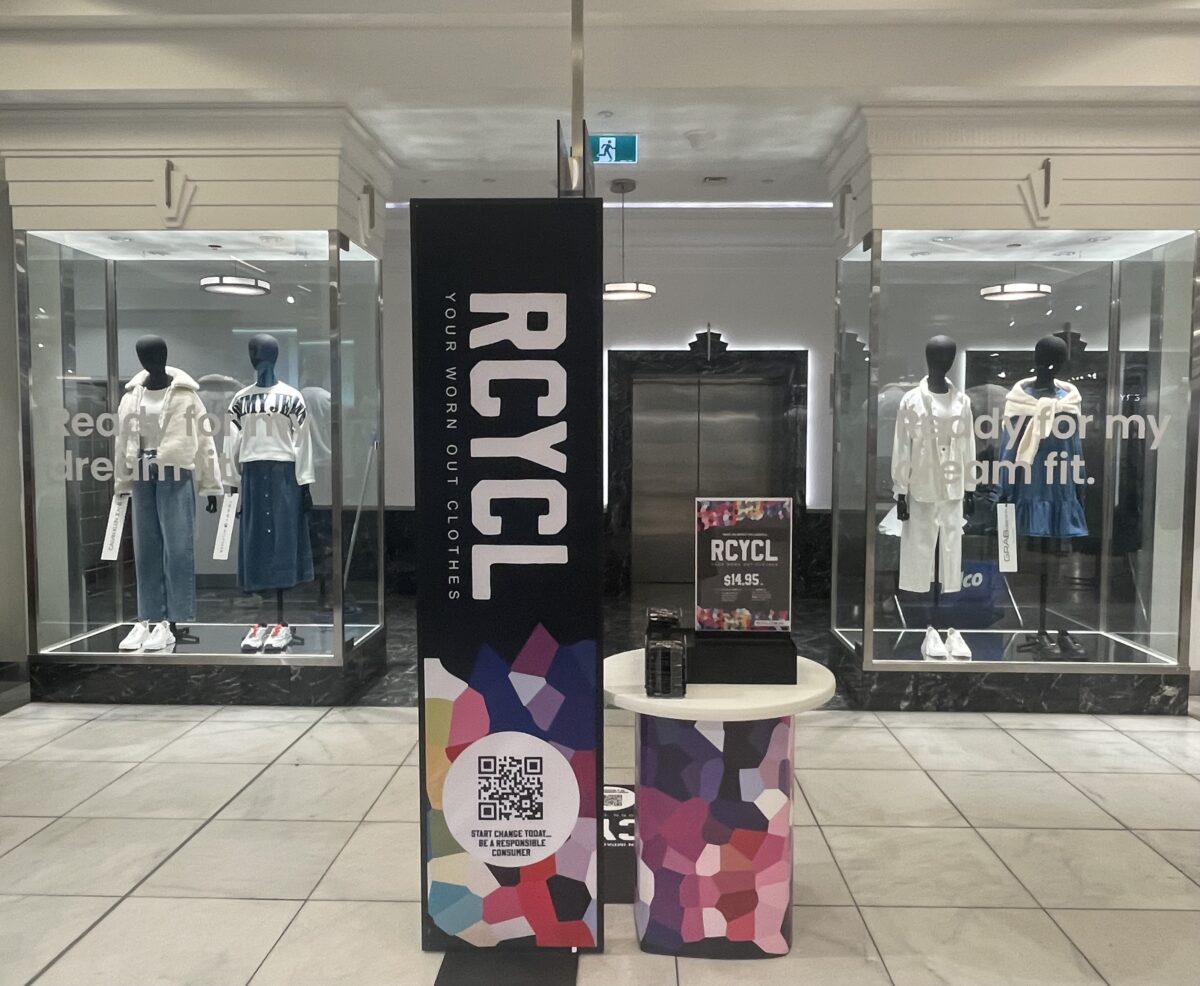
Making clothing recycling as easy as buying something new
RCYCL began with a simple, intuitive idea:
What if recycling clothing felt as intuitive and effortless as returning an online order?
Belinda designed a system for return satchels that everyday Australians could order, fill with their unwearable garments, scan via QR code and send back for responsible recycling. No sorting queues. No guessing what counts as “donatable”. No guilt. Just a simple act that diverted textiles from landfill. The idea took off.
People wanted to do the right thing - they just didn’t know how.
Retailers saw the same problem. Within months:
- MYER launched RCYCL activations in flagship stores
- THE ICONIC adopted RCYCL into their new circularity program, RE ICONIC
- RCYCL’s satchels began appearing in online shopping carts nationwide
This direct-to-consumer model helped RCYCL prove a truth that would later matter deeply to major corporates: Australians care about waste reduction, they just need an accessible pathway. What Belinda didn’t anticipate was that RCYCL’s greatest growth wouldn’t come from households or retailers at all. It would come from one introduction made by Social Traders.
The first Social Traders introduction, a turning point
In January 2024, Heidelberg Materials - a major construction materials company - was preparing to roll out new uniforms across its national workforce.
That meant a huge problem:
What to do with thousands of kilos of old, branded PPE and uniforms that couldn’t be donated and shouldn’t be landfilled?
They approached Social Traders looking for a certified social enterprise that could provide a national solution that was ethical, compliant and credible.
Social Traders knew exactly who to introduce.
“Talk to Belinda from RCYCL.”
That single email changed the course of RCYCL’s growth.
A national roll-out few recyclers would attempt
Heidelberg Materials needed collections across 48 sites, many in remote or hard-to-service locations.
Most recyclers would have declined. Belinda didn’t.
She said yes - then called her Head of Operations and asked, “Where do we even start?”
Within weeks, RCYCL had:
- sized bins for each site
- solved remote freight logistics
- mapped material flows
- set up new back-end recycling pathways
- coordinated pickup and reporting infrastructure
It was one of RCYCL’s first major B2B projects and the catalyst for a new arm of the business.
6,766 kilograms diverted from landfill
The Heidelberg Materials pilot forced RCYCL to innovate. It wasn’t just uniforms coming through the bins. It was:
- hard hats
- goggles
- gloves
- high-vis vests
- steel-capped boots
- PPE that RCYCL had never been asked to recycle before
Belinda worked closely with boutique recyclers and textile-processing partners, matching each item to the most credible recycling stream - the shipping container worth of textile waste was repurposed into insulation, carpet underlay, upholstery and yarn. Each kilogram represented a new learning. A new pathway. A new possibility.
By the end of the pilot, RCYCL had diverted 6,766 kilograms of textile and PPE waste from landfill.
It was a breakthrough, both for Heidelberg Materials and for RCYCL.
The opportunity quickly expanded: 430+ sites across Australia now have access to RCYCL’s recycling system.
Social Traders certification: A catalyst for corporate trust
Belinda describes Social Traders certification as “fundamental.”
It instantly signalled to large buyers that RCYCL was legitimate, impact-driven and vetted.
“Social Traders has allowed my business to have exposure across construction I wouldn’t have had otherwise. It’s a credible validation that elevates our impact.” - Belinda Paul, Founder at RCYCL
At Social Traders events, procurement leads approached her directly. Those conversations turned into opportunities.
Through Social Traders, RCYCL has since worked with or begun pilots with five other major construction companies. In some cases, teams started small - ordering a box of RCYCL bags for their office.
In others, they launched site-based collections tied to their social procurement goals. Either way, the momentum continues to grow.
What this demonstrates about Social Traders impact
With Social Traders, the right introduction at the right moment unlocked impact far beyond a single contract.
The email introduction to Heidelberg Materials didn’t just connect two organisations – it changed the trajectory of RCYCL. That one connection:
- Catalysed RCYCL’s transition from a B2C recycling startup to a national B2B circular-economy partner.
- Turned a uniform-recycling inquiry into a 48-site national pilot, requiring RCYCL to expand logistics, innovate back-end pathways and rapidly mature its processes.
- Diverted 6,766 kilograms of uniforms and PPE from landfill – an impact that simply would not have occurred without a certified social enterprise at the table.
- Opened access to 430 additional Heidelberg Materials sites.
- Led directly to further corporate relationships with Social Traders business members.
- Provided RCYCL with instant credibility in construction and infrastructure, sectors that would otherwise be extremely difficult for a micro-enterprise to enter.
This is the Social Traders value proposition in action. We build the marketplace for social enterprise, one purposeful connection at a time – and those connections grow into impact at a scale no single enterprise could create alone.
Wondering what makes a social enterprise?
You might also like
 Sector News
Case Studies
Leading through inclusion: The partnership transforming diverse and inclusive workforce
Sector News
Case Studies
Leading through inclusion: The partnership transforming diverse and inclusive workforce
What began as a modest commercial arrangement between CPB Contractors and CareerSeekers is now a strategic, values‑aligned workforce initiative.
 Sector News
Best practice
From e‑waste to empowerment: A game‑changing approach
Sector News
Best practice
From e‑waste to empowerment: A game‑changing approach
WV Technologies setting a new benchmark for what purpose-driven business can achieve in Australia.
 Sector News
Best practice
Breaking the mould: SPA and Navaroo’s award-winning social procurement strategy
Sector News
Best practice
Breaking the mould: SPA and Navaroo’s award-winning social procurement strategy
Instead of treating Navaroo like a typical subcontractor, SPA redesigned its approach to make the partnership succeed.