Human rights in business

Respecting human rights isn’t a box to tick, it’s a principle that must be embedded into the DNA of daily business practices.
In today’s business landscape, success is no longer measured solely by profit margins.
A fundamental shift is going beyond financial performance to encompass the positive impact on people. Respecting human rights isn’t a box to tick, it’s a principle that must be embedded into the DNA of daily business practices.
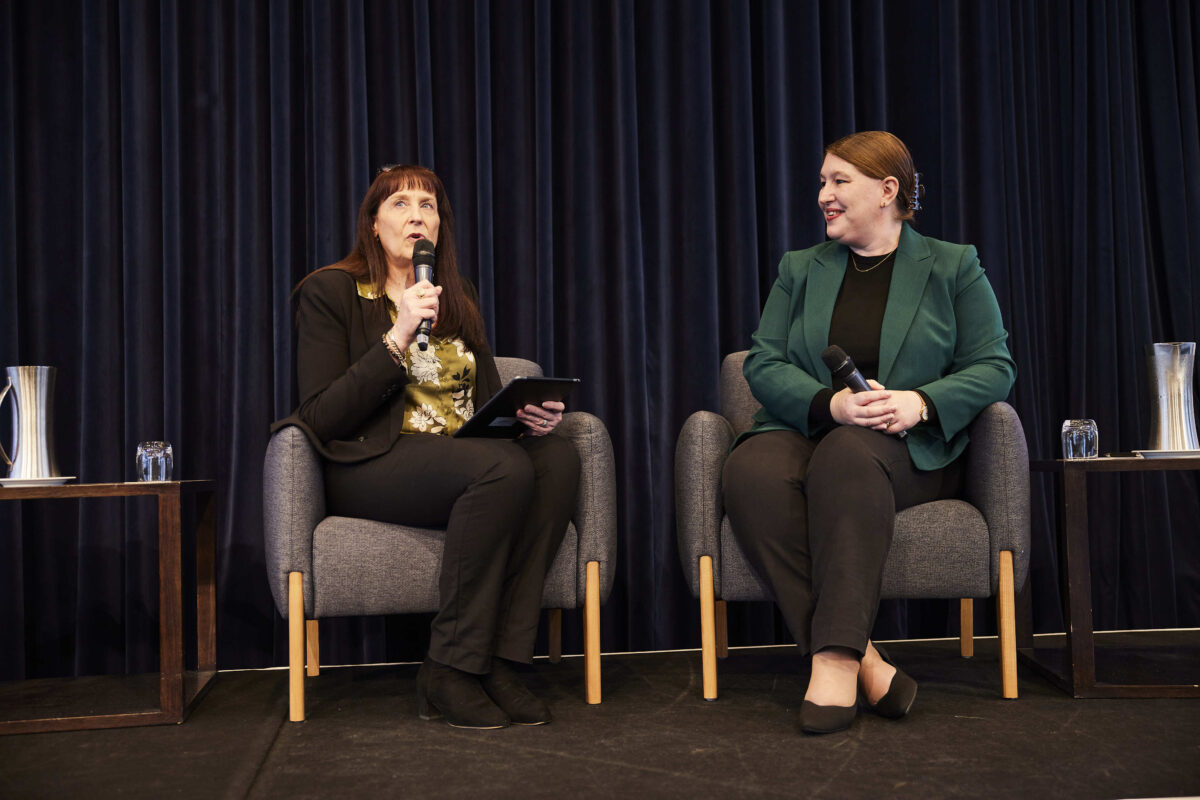
At Convene 2025, Lorraine Finlay, Australian Human Rights Commission and Sharyn County, World Commerce and Contracting had a casual yet important discussion on how businesses should put human rights into business as usual.
Human rights: A core business imperative
Too often, businesses treat human rights as a separate compliance exercise, disconnected from their core operations. This approach is outdated and ineffective. Instead, organisations must integrate respect for human rights into everyday operations—from hiring to supply chains and community engagement.
As Sharyn puts it:
“Businesses are increasingly expected to operate responsibly and sustainably to mitigate any negative impacts that they may have with respect to human rights. And they need to be at the core of their practices every day in everything we do in business.”
Why? Because this isn’t just about morality; it’s about strategy. A dual-benefit approach combines ethical imperatives with competitive advantage. Lorraine explains:
“When businesses embed human rights, when they think about human impact, it actually helps to drive economic growth, development, and lift up economies. So, from a financial perspective, it’s actually really smart, as well as being morally and ethically the right thing to do.”
Fast and hard changes ahead
The regulatory environment is evolving rapidly. Governments worldwide are introducing stringent requirements around fair employee treatment, ethical supply chains, and positive community impact. These changes are coming “fast and hard,” and businesses that fail to adapt risk reputational damage and financial penalties.
Purpose-driven leadership is critical here. Organisations that engage meaningfully with human rights, rather than opting for superficial compliance, will not only meet legal obligations but also build resilience and trust in an increasingly scrutinised marketplace.
Australia’s modern slavery leadership and its gaps
Australia has positioned itself as a global leader in combating modern slavery. In 2018, Australia was the second country worldwide to introduce a national Modern Slavery Act and also the first to implement a public repository for modern slavery reporting. Significant investments have been made to address slavery across global operations, reinforcing Australia’s commitment to ethical business practices.
However, leadership on paper doesn’t always translate to impact on the ground. Despite a strong legislative framework, meaningful operational change remains limited. Reporting quality is a major concern: overwhelming evidence shows that current Australian reports often fail to drive the practical changes needed to eradicate modern slavery.
Another challenge lies in perception. Many businesses assume modern slavery is an issue confined to distant countries. The reality? Australia faces significant domestic risks that demand urgent attention. The 2023 Global Slavery Index estimates 41,000 individuals living in modern slavery in Australia.
Progress over perfection
Addressing human rights issues in business can feel overwhelming, especially when systemic problems seem insurmountable. That’s why an incremental improvement mindset is essential. Instead of striving for immediate perfection—which often leads to paralysis—businesses should focus on making operations better today than yesterday.
Lorraine offers a practical starting point:
“Just try to do one thing that makes it better today than it was yesterday. For businesses, that’s a really good way to start.”
The ultimate goal? Integration. Human rights considerations should become part of business-as-usual, not an extraordinary exercise. As Lorraine reminds us:
“Human rights should not be seen as something extraordinary, it’s just something you should do as a matter of fact, in terms of your day-to-day business.”
Social enterprises play a crucial role here, leading by example and inspiring broader adoption across sectors.
The human side of human rights
Global challenges, from economic instability to geopolitical tensions, can make human rights work feel daunting. Maintaining optimism requires a grassroots focus.
Break down large systemic problems into tangible, daily differences made to individual lives. This perspective sustains motivation and reminds us why the work matters.
Collective action amplifies impact. Rooms filled with committed individuals, each working on human rights improvements within their sphere, create ripple effects that drive global progress. While imperfections remain, substantial positive developments are happening worldwide thanks to dedicated efforts.
Lorraine captures the essence of this work beautifully:
“At its heart, human rights are about human connection, helping human beings flourish. It’s the small things that matter.”
And perhaps most importantly:
“The number one thing is we need business to remember the why, why they’re there. And that is to actually make our world a better place for human beings.”
Human rights integration isn’t a trend - it’s a necessity. Businesses that embed these principles into their operations will thrive in a future where ethics and economics are inseparable. Progress may be incremental, but every step counts. And when those steps are taken collectively, the path to meaningful change becomes clearer.
Partnering with The Freedom Hub
At Social Traders, we know social performance challenges rarely sit in neat boxes.
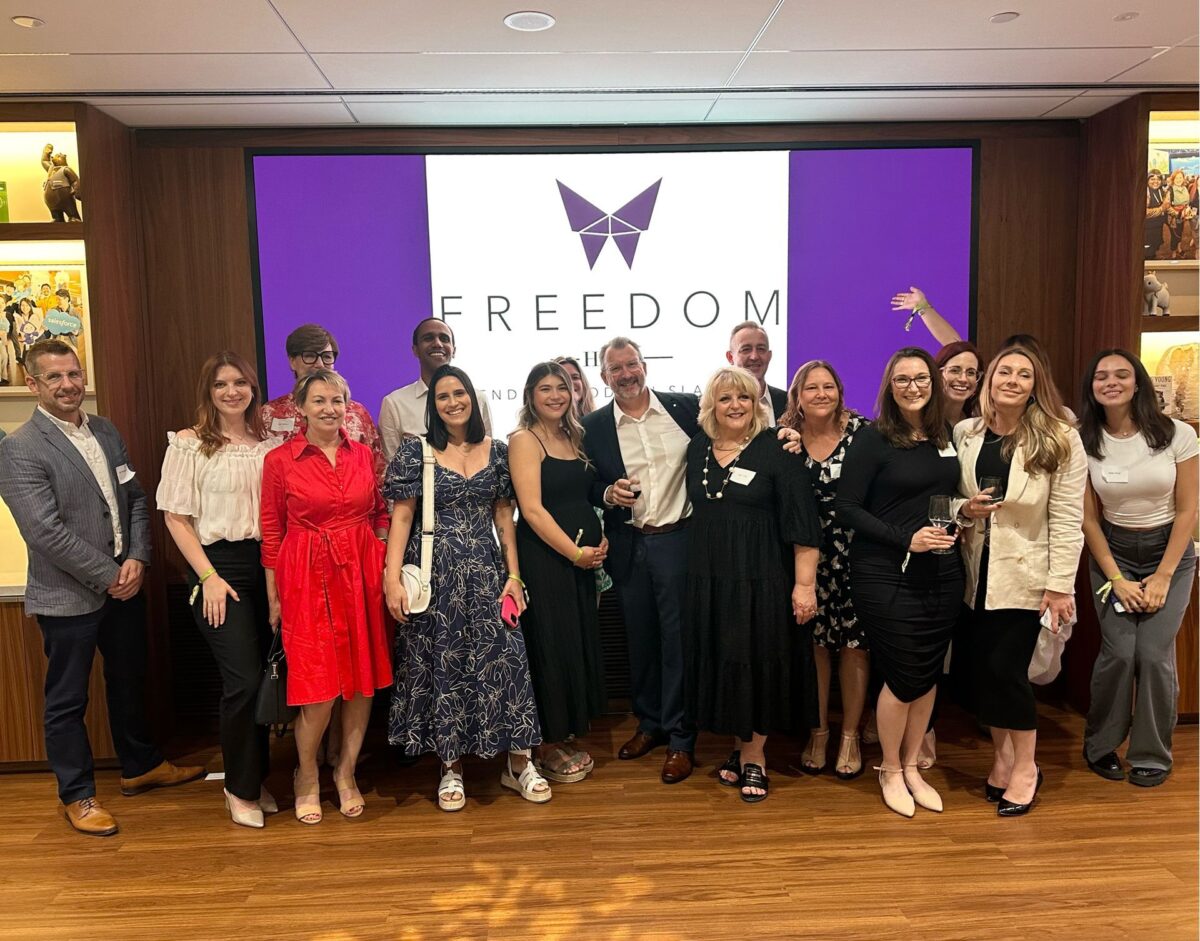
Modern slavery, fair labour practices and human rights are deeply interconnected. That’s why we’re partnering with certified social enterprise, The Freedom Hub.
Through this partnership, Social Traders members receive foundational awareness and advice, and when specialist, survivor-informed support is needed, we connect our members directly with Freedom Hub for tailored advisory services.
The Freedom Hub is Australia’s only life-long recovery hub for survivors of modern slavery. They empower survivors of modern slavery to rebuild their lives and train for lasting employment. Through their Survivor School, employment pathways, and ethical business initiatives, The Freedom Hub provide real tools for long-term freedom.
Learn more about Social Traders and how we support organisations with their social performance.
The Freedom Hub
You might also like
 Sector News
Driving social performance and ethical business practices further
Sector News
Driving social performance and ethical business practices further
Social Traders partners with The Freedom Hub to make social performance, business as usual.
 Sector News
Case Studies
Leading through inclusion: The partnership transforming diverse and inclusive workforce
Sector News
Case Studies
Leading through inclusion: The partnership transforming diverse and inclusive workforce
What began as a modest commercial arrangement between CPB Contractors and CareerSeekers is now a strategic, values‑aligned workforce initiative.
 Sector News
Best practice
From e‑waste to empowerment: A game‑changing approach
Sector News
Best practice
From e‑waste to empowerment: A game‑changing approach
WV Technologies setting a new benchmark for what purpose-driven business can achieve in Australia.